An ideal customer profile (ICP) describes who a product is trying to win. The buyer’s identity shapes technical priorities, so the most complex part of a codebase often reveals the real customer. section 5.3
Read the customer from the code
Cal.com’s embedding features, hideBranding toggle, and packages/embeds/ directory point toward developers at other companies, such as healthcare or recruiting platforms—not solo freelancers. Ask whether the person paying for the software actually uses it. section 5.3
Use visible product and architecture signals to distinguish likely customer profiles:
- Consumers buy for personal use; expect polished interfaces, social logins, mobile investment, and simple paywalls. section 5.3
- Prosumer users pay personally for work tools; expect power features, keyboard shortcuts, plugins, or templates. section 5.3
Figure 5.5 An end-user (left) cares about the surface: a clean UI, a fast page, one-tap checkout. A developer (right) cares about the plumbing: a clean API, SDKs, and reliable webhooks. A product is built for whoever pays, so the part of the codebase with the most complexity reveals the true customer.
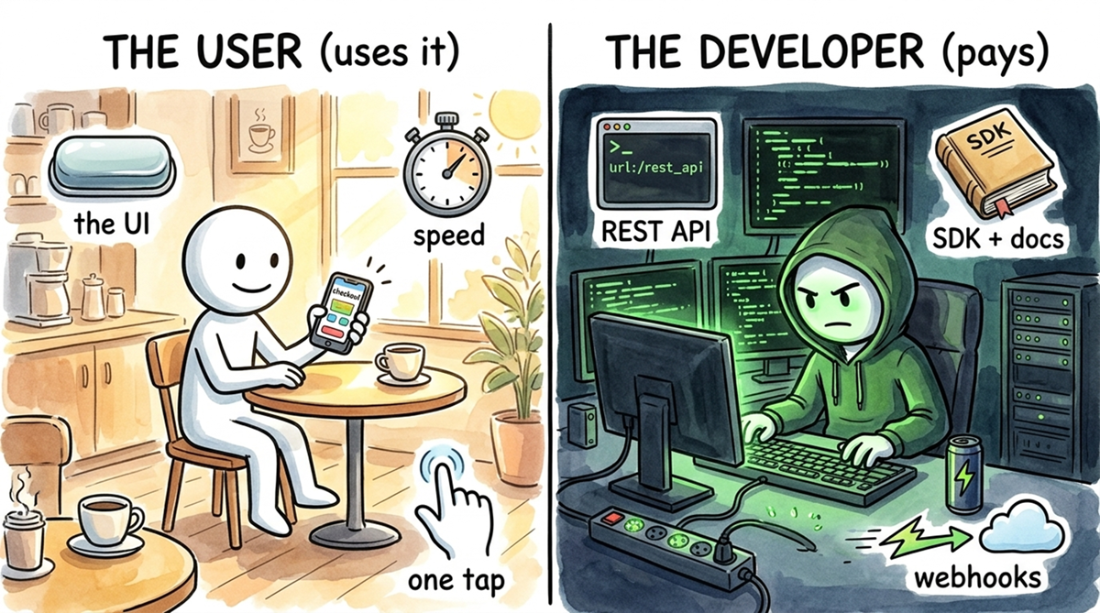
Compare the surface complexity valued by end users with the API, SDK, and webhook complexity valued by developer customers. section 5.3
