Identity-based fraud targets a person’s identity rather than directly abusing a payment mechanism. It includes taking over a legitimate account and using real and fabricated data to invent a nonexistent person for a credit application. section 7.2
Two forms illustrate the category:
- Account takeover seizes control of a legitimate account. section 7.2
- Synthetic identity fraud combines real and fake data to invent a person for a credit application. section 7.2
Figure 7.2 A structured typology of financial fraud. This framework organizes fraud into six primary categories based on the core attack vector, such as exploiting a transaction, compromising an identity, or deceiving a person. This structured view is crucial for developing specific and effective AI-driven countermeasures for each type of threat.
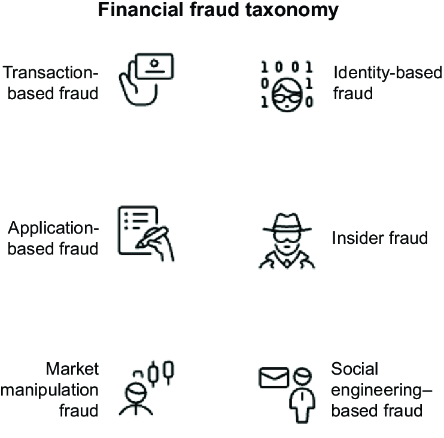
The fraud typology places identity-based fraud alongside other categories organized by their attack vector. section 7.2
