Idiopathic pulmonary fibrosis (IPF) is a chronic, progressive lung disease involving unexplained scarring and fibrosis. It affects approximately 100,000 people in the United States, with median survival of three to five years after diagnosis. Pirfenidone and nintedanib slow progression but do not reverse fibrosis or substantially extend survival. section 13.3.1
Target discovery for IPF can combine patient-lung transcriptomics, bronchoalveolar-lavage proteomics, pulmonary-fibrosis GWAS data, and literature-mined relationships. Differential expression, pathway enrichment, and network analysis highlight dysregulated genes, biological processes, and connected hub genes; novelty scoring then balances biological rationale against prior investment and patent coverage. section 13.3.1
Figure 13.7 The four stages of the rentosertib program. Multi-omics data and literature flow through PandaOmics to a scored target list; Chemistry42 generates and optimizes candidates against a multi-objective reward; experimental readouts feed back to refine the models; clinical development follows. Sections 13.3.1 through 13.3.4 walk through each stage.
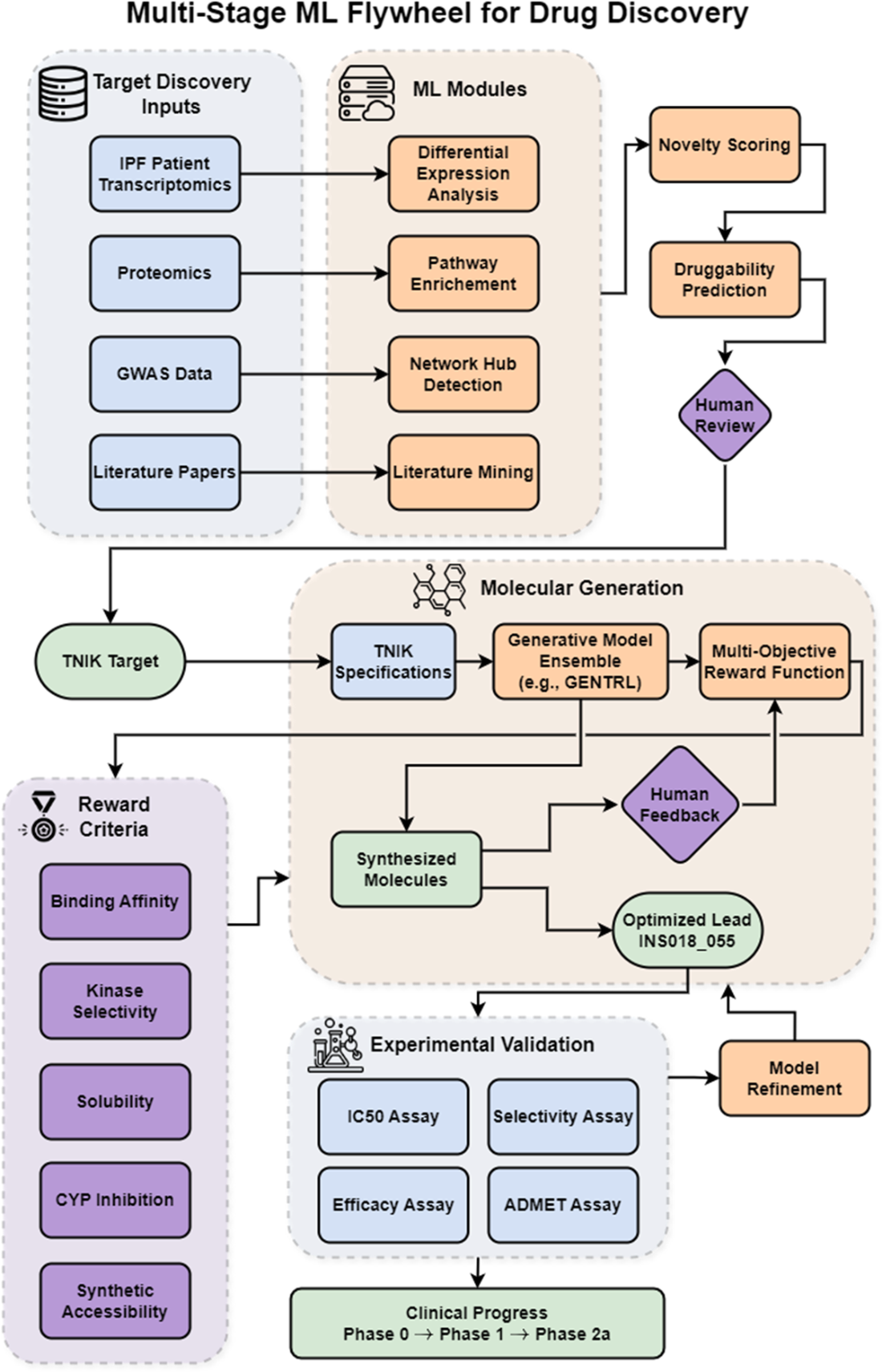
Trace the rentosertib program from multi-omics and literature-based target scoring through AI-assisted molecule generation, experimental feedback, and clinical development. section 13.3.1
