Imperative programming expresses computation as an ordered sequence of statements that describes how a program operates. A runtime invokes an entry point, such as Java’s main method, and executes those statements step by step. section 1.3.1 section 8.1.2
The model is straightforward for sequential work, but blocking I/O can occupy a worker thread from request start to completion. Database, filesystem, network, and broker operations may therefore increase thread, memory, and CPU demands under concurrent load. section 8.1.1
In Quarkus, imperative programming is a supported execution style rather than a required architecture:
- Write applications using the familiar sequential model, even though Quarkus uses a reactive engine internally. section 1.3.1
- Combine imperative and reactive code, including within the same application or class, to make a gradual transition. section 8.1 section 8.6
- Consider reactive programming or virtual threads when responsiveness and scalability under heavy traffic matter, while accounting for their respective limitations. section 1.3.1 section 8.1
Sequential request processing
A Java entry point executes statements in order. When one statement performs a blocking database or network call, the request’s worker thread waits before the next statement can proceed. Reactive execution instead schedules continuation code for the operation’s completion. section 8.1.1 section 8.1.2
Figure 8.1 Blocking I/O request handling: threads are blocked while waiting for an I/O operation to complete
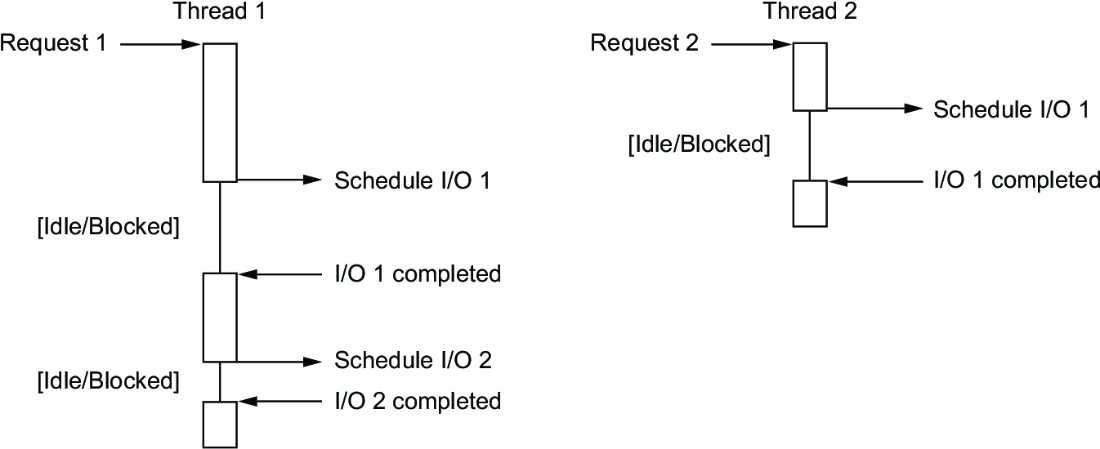
Compare how blocking I/O keeps request-handling threads waiting while operations complete. section 8.1.1













