Implemented is the control-rating dimension for the actual application or execution of cybersecurity policies and procedures. It represents what an organization does in practice, alongside policy, procedure, measured, and managed principles. section 1.5.1
Use the dimension to interpret control adherence within a broader assessment:
- HITRUST controls specify implementation, measurement, management, policies, procedures, and practices. section 1.5.1
- Implemented contributes a weighted amount to the overall control score, helping reflect cybersecurity posture and control maturity. section 1.5.1
HITRUST certification assessment
A validated assessment evaluates adherence to prescribed controls and illustrative procedures; the implemented rating reflects whether policies and procedures are actually being executed. section 1.5.1
Figure 1.2 HITRUST scoring criterion by percentage. The percentages indicate the weights placed on each category for scoring purposes.
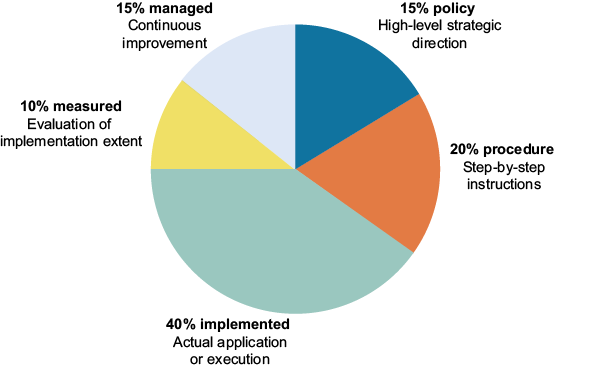
Use the scoring figure to see how the implemented principle’s weight fits into HITRUST control-rating criteria. section 1.5.1
