Impromptu networking is a check-in format where participants discuss questions in pairs, then share what they heard with the wider group. It creates personal connection before collaborative work and can surface tensions, questions, and barriers to participation early. section 4.4.1
Use it to shift a group from reacting to understanding. Asking participants to report another person’s perspective makes listening the task; private conversations also give people a safer way to enter a tense topic. The facilitator can observe who connects, who avoids whom, and where further attention may be needed. section 8.3.2 section 4.4.1
Run a practical impromptu networking check-in as follows:
- Choose questions that fit the meeting goal and current social dynamics; combine a personal prompt with questions about what participants know, have experienced, or want to ask. section 4.4.1
- Explain the format and model the first prompt with a short anecdote so participants understand the expected kind of exchange. section 8.3.2
- Invite people to speak with someone they know least, using several rounds when useful, and ask them to listen for the other person’s account. section 8.3.2
- Bring the group back together and ask what each person heard from someone else rather than what they personally want to say. section 8.3.2
- Keep the atmosphere relaxed; coffee and snacks can help participants settle into the exchange. section 4.7
A light check-in during polarization
When conflict around a reservation flow was becoming polarized, use three rounds of prompts: share a funny or weird personal reservation anecdote, name the part of the flow you work on, and describe notable events in the current flow. Keeping the exchange light helps uncover shared business concerns without adding fuel to opposing sides. section 8.3.2
Figure 4.12 Example check-in we used at BigScreen. We start with a personal question to create more group understanding. Questions 3 and 4 focus on the session’s content, ensuring participants engage and reflect on the topic at hand. Our goal is to avoid opinions on the content and instead delve into what participants know and their questions. Remember to customize your check-in questions for each session and refresh the format regularly to keep it genuine.
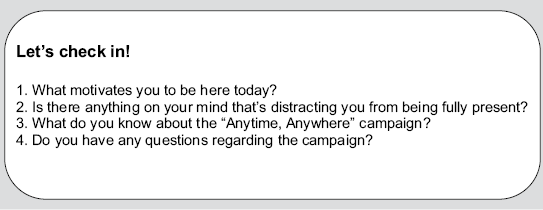
Use the example check-in as a prompt-design aid: begin with a personal question, then move toward session content, knowledge, and questions rather than opinions. Refresh and tailor the questions so the format remains genuine. section 4.4.1
