An inbound adapter handles requests from outside an application or subdomain and invokes its business logic. In hexagonal architecture, the adapter invokes an inbound port; the business logic remains independent of the adapter, which depends on it. section 3.2.1 section 3.3.2
Common forms and boundaries include:
- Web controllers can handle HTTP requests, REST endpoints, or web pages; message handlers and broker clients can receive messages. section 3.2.1 section 3.3.2
- Multiple inbound adapters can invoke the same inbound port. By contrast, outbound adapters serve business logic requests to external systems. section 3.3.2
Figure 3.16 An example of a hexagonal architecture, which consists of the business logic and one or more adapters that communicate with external systems. The business logic has one or more ports. Inbound adapters, which handles requests from external systems, invoke an inbound port. An outbound adapter implements an outbound port and invokes an external system.
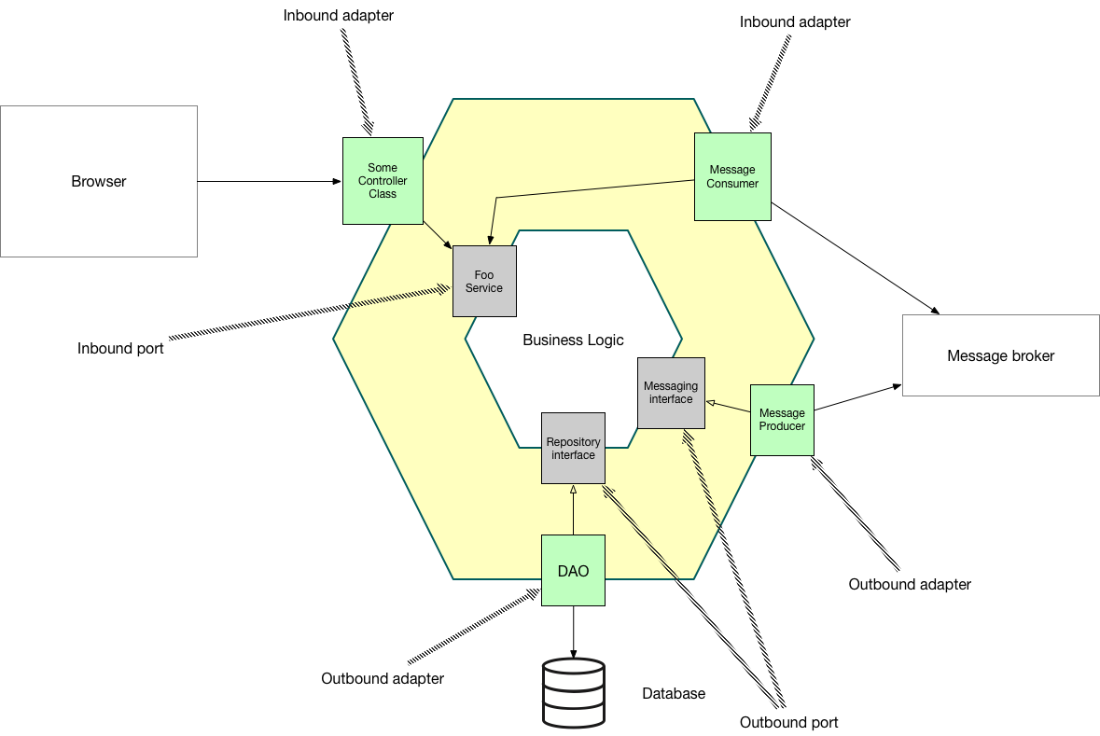
Trace how inbound adapters invoke ports at the business-logic boundary. section 3.3.2
