Indirect communication expresses an opinion or criticism without openly naming the speaker’s position or its specific target. It can make disagreement safer to voice, but hidden opinions may intensify conflict, especially when a higher-ranking person implies a preferred answer. section 8.1.2
Recognize three common forms:
- Third person: “There are people here who don’t think this new architecture is the right way forward” avoids saying “I don’t think…” section 8.1.2
- General substitution: “Someone made a mistake” or “A department requested more time” avoids naming the responsible person or group, but can still make the target feel exposed. section 8.1.2
- Guardian angel: someone raises a concern as though helping others, rather than acknowledging personal disagreement. section 8.1.2
A disagreement hidden as a question
“Won’t it be a problem?” may really mean “I think it’s a problem to take ‘Price was calculated’ as a pivotal event.” Treating the question as concealed disagreement makes the unresolved position visible. section 8.1.2
Figure 8.1 Edge behavior happens when someone tries to oppress their inner shadows, but we can observe it because the unconscious behavior contradicts what we observe in the conscious behavior. As mentioned in chapter 5, when words and music don’t go together, they point to a missing element.
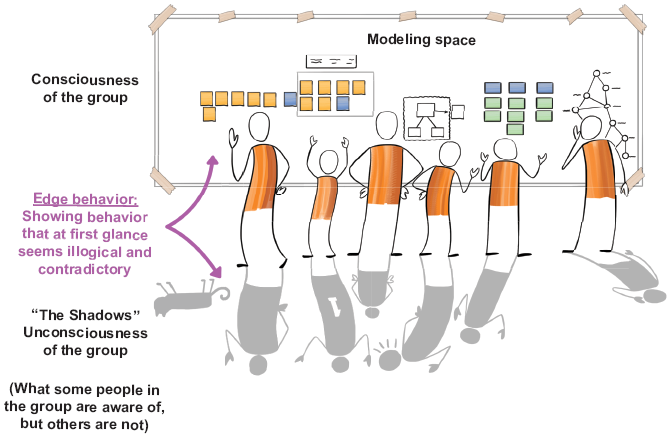
Use the edge-behavior figure to examine how conscious wording and observable behavior can contradict each other. section 8.1.2
