An inference framework supports production model serving through an inference engine and related conversion, optimization, and operational components. Separating training and inference frameworks can preserve research flexibility while keeping long-lived production systems replaceable and maintainable. section 15.3.1
Choose the arrangement that fits the system’s priorities:
- Use separate frameworks when research tools such as Pandas, scikit-learn, or Keras provide flexibility but are not suited to production inference. section 15.3.1
- Use one framework when its production capabilities close the research-to-serving gap; Torch 2.0 compilation is one example. section 15.3.1
- Use ONNX as an interframework language: its ecosystem includes model conversion, optimization tools, and ONNX Runtime for inference across varied backends. section 15.3.1
Figure 15.3 A wide spectrum of tools with their focus on either research or production serving goals
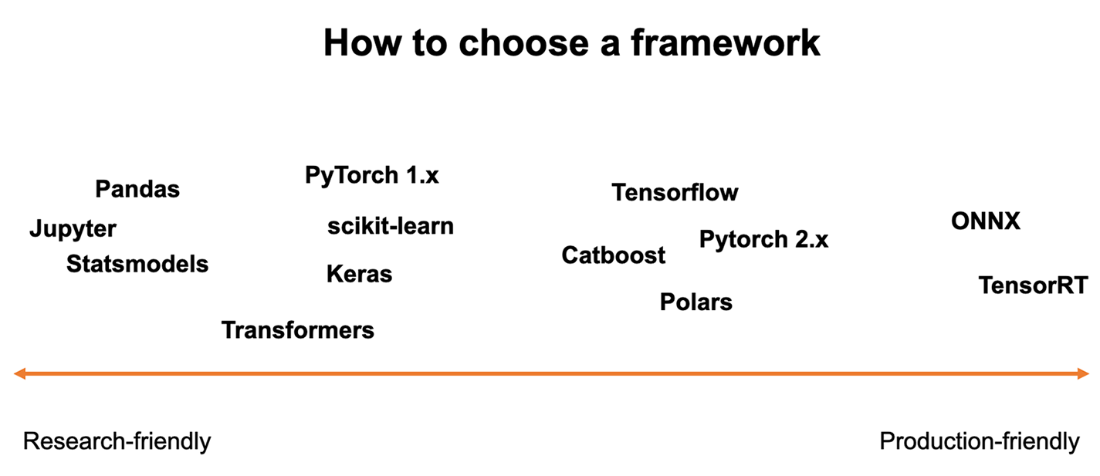
Compare tools positioned toward research flexibility, production serving, or the space between them. section 15.3.1
