An information schema is a queryable collection of database metadata describing available schemas, tables, columns, and their properties. section 11.3.3
Analysts can inspect information schemas to understand available warehouse data, while teams can use them as the structural starting point for clearer documentation. section 11.3.3
An information schema can expose:
- Available schemas and tables. section 11.3.3
- Columns and properties such as data types and row counts. section 11.3.3
- Primary-key and foreign-key references. section 11.3.3
Its raw metadata is useful for analysts but may be difficult for less experienced stakeholders to use directly. Adding purpose and usage descriptions turns it into human-readable documentation and can support a searchable data catalog. section 11.3.3
Figure 11.17 Information schemas contain metadata about the information in a data warehouse.
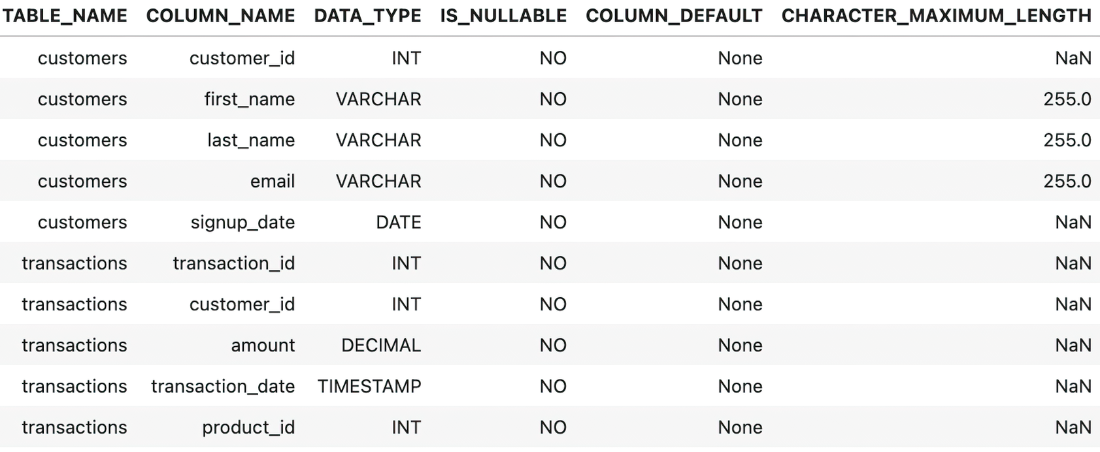
Use the figure to inspect how information schemas represent warehouse metadata. section 11.3.3

