liveBook · Manning

Informative content

As explained in Architecting Accessibility

Informative content is explanatory specification material that provides examples, techniques, and interpretation without imposing conformance obligations.

Informative content helps teams interpret and implement WCAG success criteria through explanations, examples, and techniques. Unlike the testable success criteria, it does not impose conformance requirements. section 1.5.1

Figure 1.2 This image illustrates the various components in WCAG 2.2. Guidelines are organized under four principles. Each of the 13 guidelines includes normative success criteria: the requirements used to determine conformance at levels A, AA, or AAA. WCAG also provides informative supporting material, including techniques, understanding documents, testing rules, and additional guidance to help explain and apply those requirements.
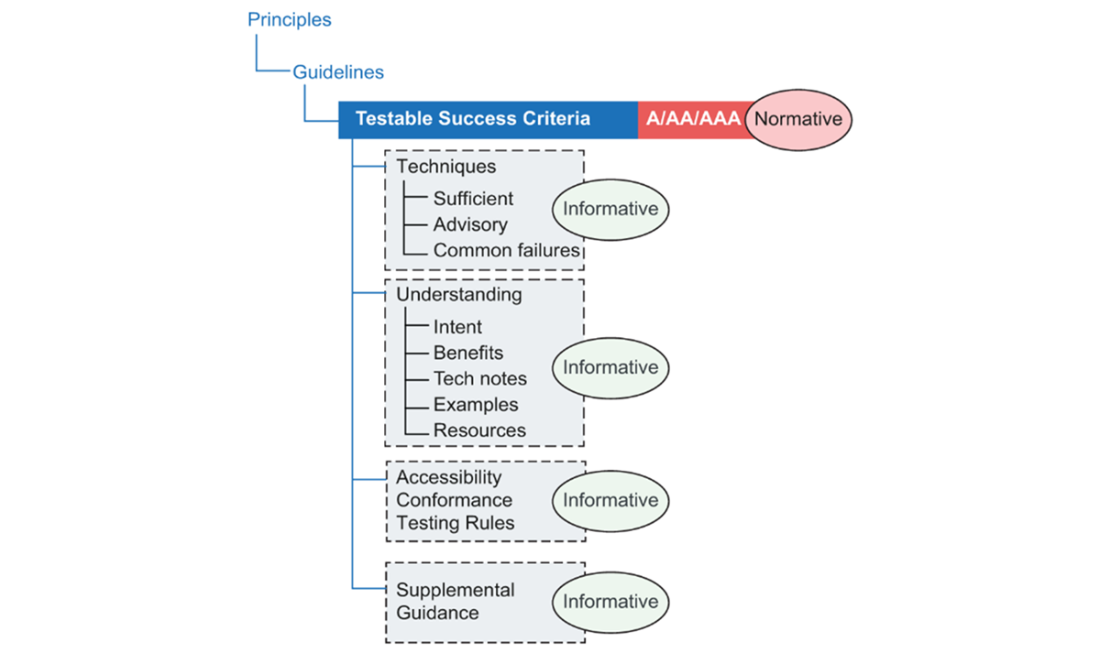
See how WCAG separates conformance requirements from supporting material such as techniques, understanding documents, and testing rules. section 1.5.1
How Architecting Accessibility covers it

How deep it goes
Defines its supporting role and distinguishes it from normative requirements; does not detail individual techniques.
Examples
Illustrates techniques with a main-content skip link, semantic heading levels, focus indicators, and time-limit warnings.
What you can do after
Apply supporting explanations and techniques to interpret and implement testable success criteria.
How it connects
Connects WCAG success criteria with techniques, understanding documents, testing rules, and additional guidance.

This explainer was generated by Manning's knowledge graph from the text of Architecting Accessibility. The section links point to the parts of the book it draws on.