Infrastructure coupling occurs when components share infrastructure and one component’s behavior affects another. They need not communicate directly: shared compute, networking, databases, or message brokers can link their runtime behavior. section 4.5
Shared infrastructure creates two main risks:
- Resource competition: one service can consume network bandwidth or database capacity, issue expensive queries, or hold locks that block another service. section 4.5.2
- Configuration changes made to support one service can unintentionally affect another service using the same infrastructure. section 4.5.2
Customer Service and Order Service
When both services share a Kubernetes cluster and database server, the less critical Customer Service could impair the more critical Order Service through resource competition or infrastructure changes. section 4.5.1
For highly available services, combine runtime decoupling with dedicated infrastructure and infrastructure services. A separate cluster and database for the Order Service reduce resource sharing and exposure to changes made for other services. Some coupling is inevitable, so weigh isolation against its drawbacks. section 4.5.3 section 4.6
Figure 4.17 To minimize infrastructure coupling and improve availability, services that are critical to the business should be deployed on separate infrastructure and loosely runtime coupled to the rest of the application
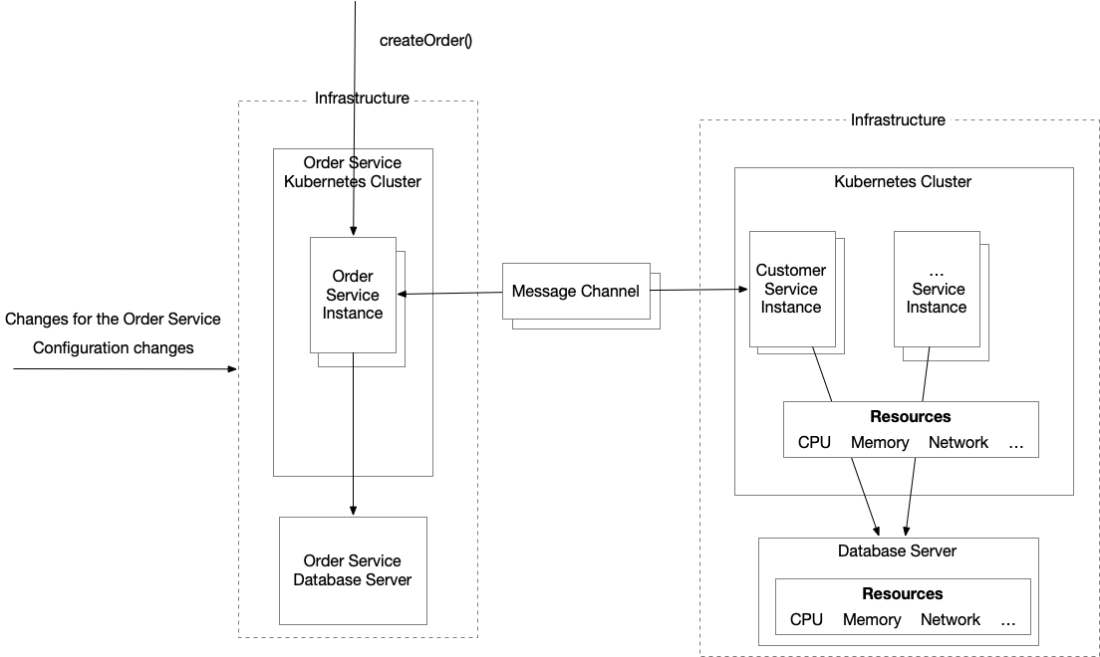
Shows how separate infrastructure and loose runtime coupling protect critical services. section 4.5.3
