Infrastructure testing is the automated verification of infrastructure configuration and behavior against expected conditions. It catches failed changes before production, reduces change failure, and builds confidence in infrastructure updates. section 6.0
Manual checks become expensive and incomplete as networks and dependent resources grow. Automation turns repeatable checks into scripts that can run after each infrastructure change. section 6.0
A practical infrastructure-testing flow is:
- Represent the infrastructure change and automation under source control. section 1.2.1
- Create temporary or virtual resources that exercise the intended configuration. section 1.2.1 section 6.0
- Check health, connectivity, and connections to existing networks or services. section 1.2.1 section 6.0
- Promote the change only after the checks pass; use configuration records to investigate affected applications when they fail. section 1.2.1
Testing a new network segment
An automated script creates a server on the new segment, verifies its connectivity, and tests connections to existing networks. The same checks can run for later changes instead of repeating hours of manual verification. section 6.0
Figure 6.1 Manual testing may require lower effort initially, but as the number of infrastructure resources in your system increases, that effort increases. Automated testing takes a high initial effort that decreases as you grow your system.
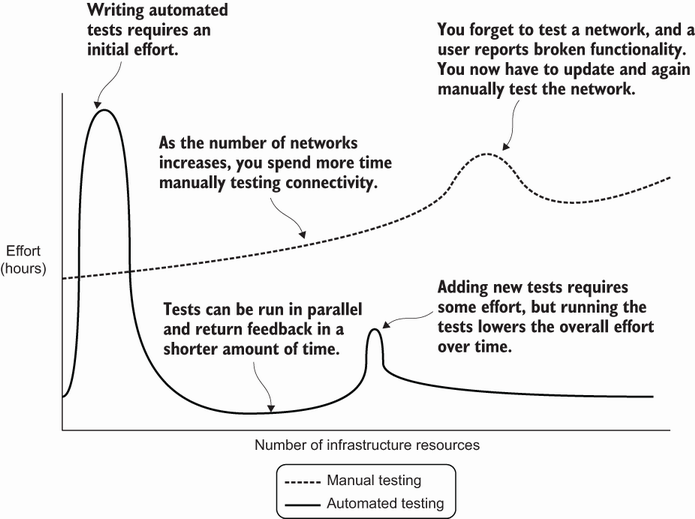
Compare the rising effort of manual testing with the higher initial investment and improving scalability of automated testing. section 6.0
