How can a printed line appear where the printing surface has been cut away? Intaglio answers by putting ink below the surface. A metal plate is engraved, covered with viscous ink, carefully wiped, and pressed against damp paper. Ink left in the recessed lines transfers under the press’s pressure. section 8.2
This reverses the logic of a woodblock. In a woodblock, raised areas receive ink and removed areas stay blank. In intaglio, the maker engraves where ink should appear. Fine detail depends on the engraved lines, the ink, the paper, and the pressing process. section 8.2
The name comes from the Italian intagliare, “to engrave.” Printing engravings adapted tools used for decorating metalwork such as silver. Earlier metalworkers made inked proof prints of niello designs to preview how their black-filled engraved lines might look. section 8.2
Copper-plate engraving
By the late fifteenth century, a copper plate could be inscribed with a hard metal burin to reproduce simplified paintings or create original works. One plate could produce hundreds of printed copies. section 8.2
Figure 8.8 Engraving, Ars moriendi by Master ES, circra 1450
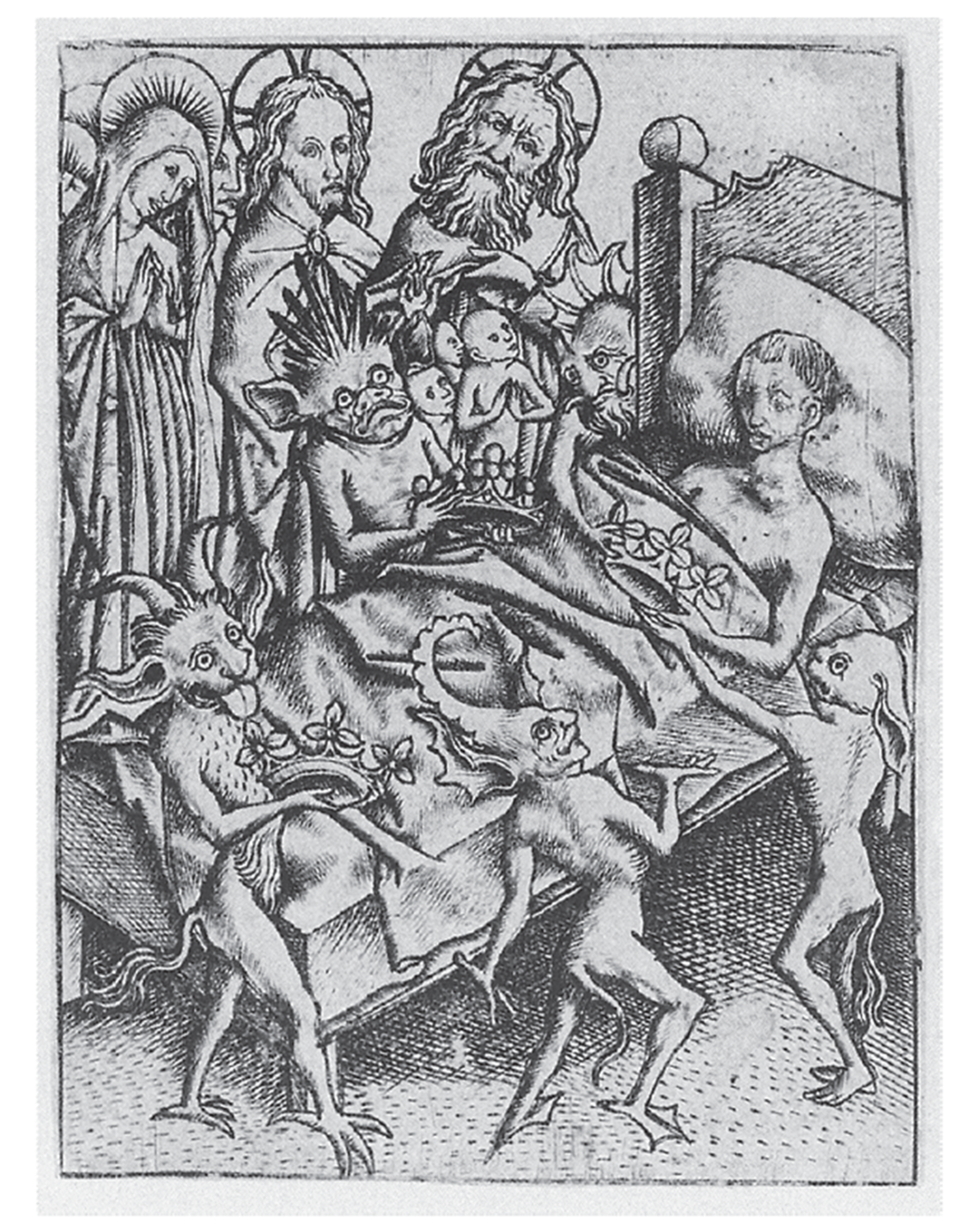
An early engraving provides a concrete view of the kind of line-based image an intaglio plate can print. section 8.2