Intentionality is the capacity of a mental state to be about or directed toward something. It matters when judging whether an AI system is thinking about what its outputs describe, rather than merely producing language that refers to it. section 9.1.4
A person’s words are commonly tied to beliefs, goals, experience, and commitment to meaning. A language model may produce similar words, but it is unclear whether they express original intentionality or derived intentionality inherited from human language, training data, and use. Fluent performance alone does not settle the question. section 9.1.4
The disagreement appears in the debate over syntax and semantics. Searle argues that rule-governed symbol manipulation does not produce meaning, which depends on biological processes associated with consciousness and intentionality. Critics locate understanding in the whole system or in learning and interaction. The dispute contrasts observable behavior with whether a system genuinely understands. section 1.5.4
The Chinese Room
A person follows English instructions to manipulate Chinese symbols and produces correct replies without understanding Chinese. The example separates an appearance of meaningful communication from the question of whether understanding or intentionality is present. section 1.5.4
Figure 9.3 Same tools, different act. A master copyist may use the same tools and produce a visually similar result, yet intention, authorship, history, and context still shape how we judge the work. The example shows why skilled performance can be real without settling what kind of act the performance belongs to.
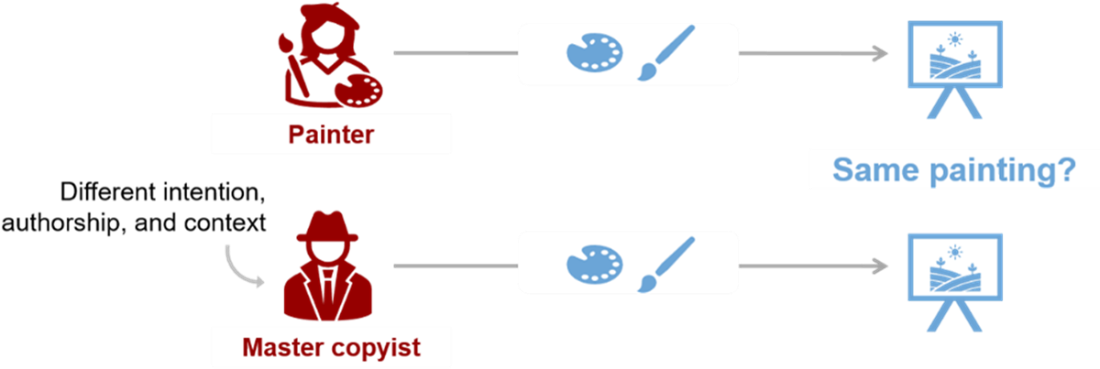
The copyist analogy shows how skilled, similar-looking performance can leave intention, authorship, and the nature of an act unsettled. section 9.1.4
