Internal beta testing is a structured review of a model or product change by employees before it reaches external users. It helps catch obvious defects, qualitative issues, and edge cases before an online experiment begins. section 7.2
Give employees a way to inspect and interact with the change:
- Build a lightweight internal UI to compare model versions. section 7.2
- Use a small internal A/B test to expose employees to the change, not to measure online impact. section 7.2
- Enable model variants for employees in a product sandbox using a feature flag. section 7.2
Figure 7.1 illustrates an example of a systemic ranking bias caught during internal beta testing: The same popular title (represented as a star) repeatedly appears in the top position of the 'Movies To Watch' row across different users and segments. This pattern, observed before launch, indicates an overweighted popularity feature in the re-ranking stage which is a problem that could influence engagement metrics if not caught before.
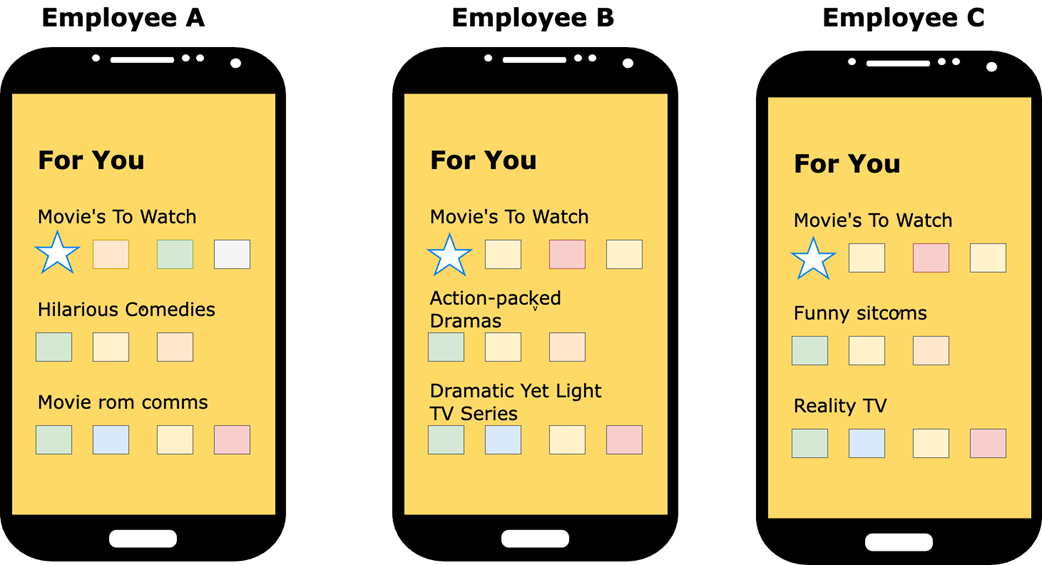
The same popular movie appearing first across users and segments can reveal an overweighted popularity feature in re-ranking before launch. section 7.2
Treat a passed beta as a readiness signal, not proof of user impact or full-rollout readiness. Employees may differ from customers in technical familiarity, geography, devices, accessibility needs, language preferences, and usage patterns. Use an online experiment to evaluate product impact. section 7.2
