An item-to-item (I2I) recommendation starts with a specific item and asks what other items are relevant. On a product detail page, the item being viewed is the seed. This differs from a user-to-item recommendation, which starts with a user profile; an I2I result can still incorporate user preferences. section 1.2 section 1.2.2
Figure 1.4 A product detail page showing item-to-item recommendations. The suggestions are based on the current product being viewed, not the user's profile.
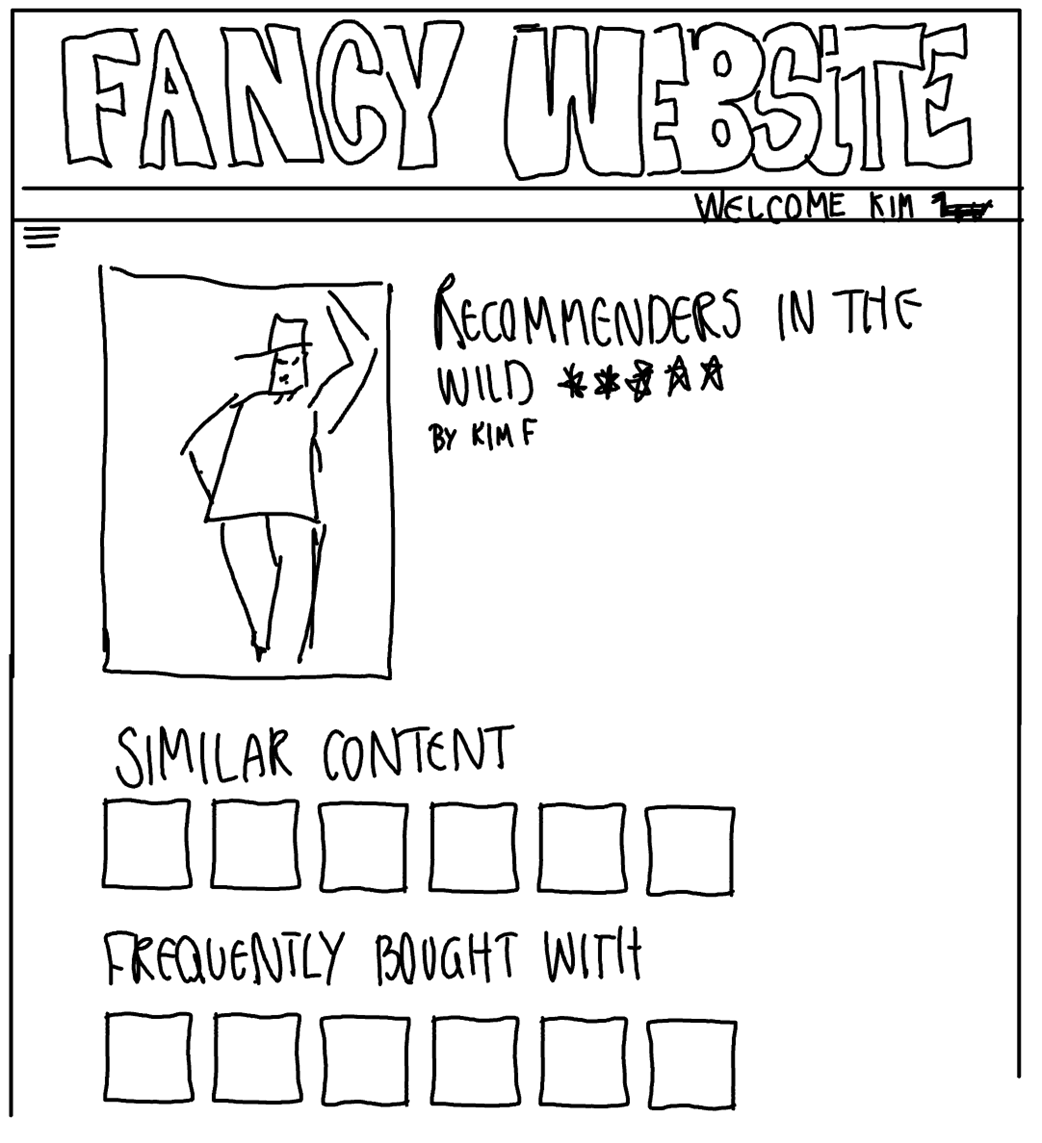
The product detail page places recommendations beside the item that seeds them, making the starting point of I2I recommendations visible. section 1.2.2
Choose the relationship to surface according to the goal:
- Similar items offer alternatives, such as other t-shirts with slight differences; a more expensive alternative can support up-selling. section 1.2.2
- Complementary products help the current item function, such as batteries for a toy or a case for a phone. section 1.2.2
- “Complete the look” suggestions pair items stylistically, such as a jacket with a t-shirt, rather than supplying something functionally necessary. section 1.2.2
- Frequently bought together suggestions follow purchase-basket co-occurrence. They need not identify *why* items belong together. section 1.2.2
The signals depend on the relationship. Item metadata can support similarity and other content-based pairings; behavioral data can reveal items consumed together. A simple recommender can use session data to establish an item-to-item baseline, then extend toward user-to-item recommendations. In a larger system, recommendations also draw on context and interaction feedback. Watch for cold starts and popularity bias when behavior supplies the signal. section 1.2.2 section 2.0 section 1.6