liveBook · Manning

Iterative MVP-driven implementation

As explained in Effective Platform Engineering

Iterative MVP-driven implementation is a delivery approach that releases minimal platform capabilities in short cycles to validate assumptions and guide subsequent changes.

Iterative MVP-driven implementation delivers minimal platform capabilities in short cycles, then uses real-world usage and developer feedback to validate assumptions and guide the next changes. section 10.2.5

Apply the technique by:

  • Delivering focused platform capabilities in short, iterative sprints. section 10.2.5
  • Reviewing real-world usage and developer feedback regularly, then adapting features. section 10.2.5
  • Collaborating across functional teams to encourage innovation and reduce rework. section 10.2.5

LaunchPad

An internal developer platform used standardized service templates as an incremental platform capability, providing preconfigured foundations for common microservices and reducing setup time. section 10.2.5

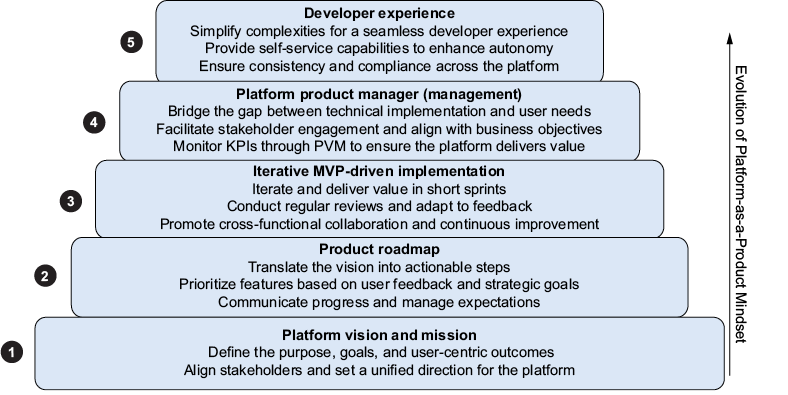
Figure 10.4 Visual representation of the lifecycle of the platform-as-a-product approach, highlighting how to transition from vision and mission to a fully operational, developer-centric platform
A list of a product manager

AI-generated content may be incorrect.

Use the lifecycle diagram to connect iterative implementation with platform vision, roadmap, product management, and developer experience. section 10.2.5

How Effective Platform Engineering covers it

How deep it goes
Defines sprints, reviews, adaptation, and collaboration but does not specify tools, sprint mechanics, or detailed implementation procedures.
Examples
Uses LaunchPad and its standardized microservice templates as a platform implementation example.
What it assumes
Assumes a defined platform vision and roadmap that establish direction and prioritize subsequent delivery.
What you can do after
Practice/perform incremental platform delivery that adapts features to usage patterns and developer feedback.
How it connects
Connects platform vision and mission, product roadmaps, platform product management, and developer experience.

This explainer was generated by Manning's knowledge graph from the text of Effective Platform Engineering. The section links point to the parts of the book it draws on.