A join key is a field whose matching values identify records that can be combined across data structures. Reliable keys make cleaned, transformed data easier to query and reuse. section 11.3.1
Use a join key to:
- Connect newly collected data with existing warehouse models. section 11.3.1
- Preserve a stable identifier when different systems use different naming conventions. section 11.3.1
- Check related fields for incompatible data types before joining. section 11.3.1
Weather data keyed by ZIP code
A tourism company retrieves weather data for operating locales. Saving the zip_code sent with each API request gives the historical_weather dataset a join key for connecting weather records to existing business data, despite differences such as “NYC” and “New York City.” section 11.3.1
Figure 11.11 Structuring data in a warehouse involves ensuring it can be easily and accurately queried.
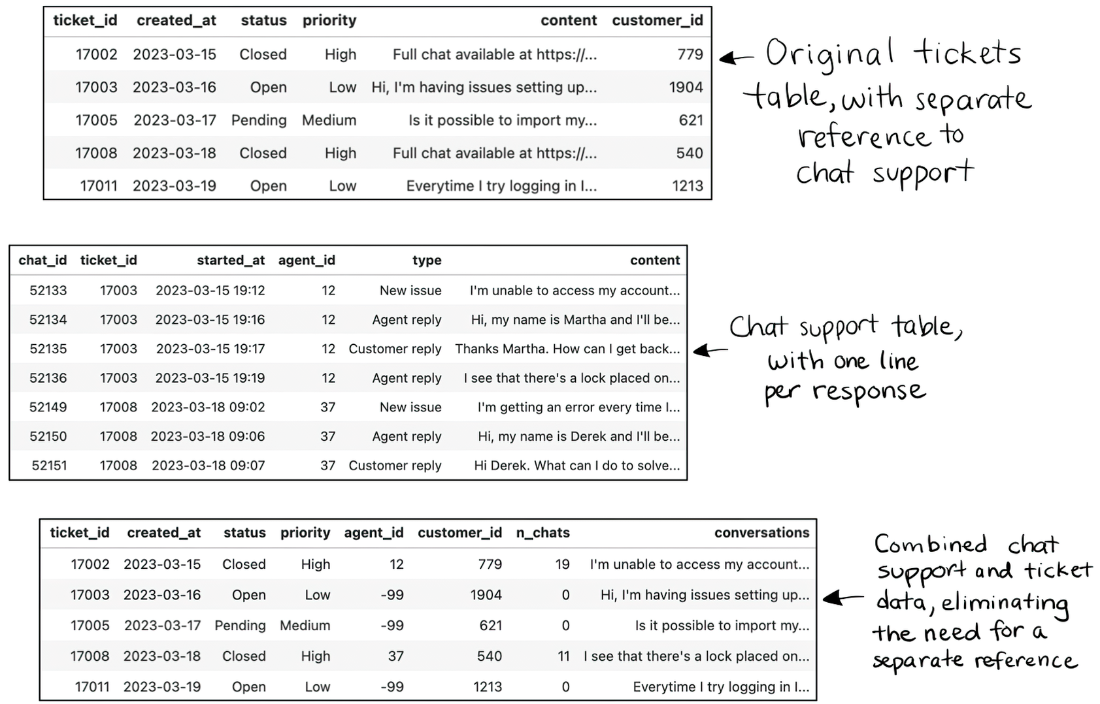
Use the warehouse-structure figure to connect join keys with accurate, convenient querying. section 11.3.1
