A kinase is an enzyme that transfers a phosphate group from ATP to a substrate. This modification changes the substrate’s shape and function, switching signaling pathways on or off. section 8.1.1
Kinases are major small-molecule drug targets, particularly in cancer and inflammatory disease. Their broad influence over cell processes creates therapeutic opportunities but also makes selectivity difficult. section 8.1.1 section 1.4.1
Kinase inhibitor design must balance several practical requirements:
- Bind the intended kinase with sufficient affinity. section 8.1.1
- Avoid inhibiting other kinases, especially because many inhibitors target the conserved ATP-binding site. section 8.1.1 section 1.4.1
- Use computational methods when testing specificity across the whole kinase family is too expensive for routine experimentation. section 8.1.1
Kinase inhibition in drug discovery
A small-molecule inhibitor can bind a kinase and interfere with enzyme function, preventing the normal conversion of substrate into product. The same strategy underlies kinase-focused oncology programs, while COX inhibition illustrates the broader use of enzyme inhibition for inflammation and its potential side effects. section 1.4.1
Figure 8.2 Map of human protein kinases, i.e., the Manning kinome tree, clustered based on sequence similarity into eight major groups [3].
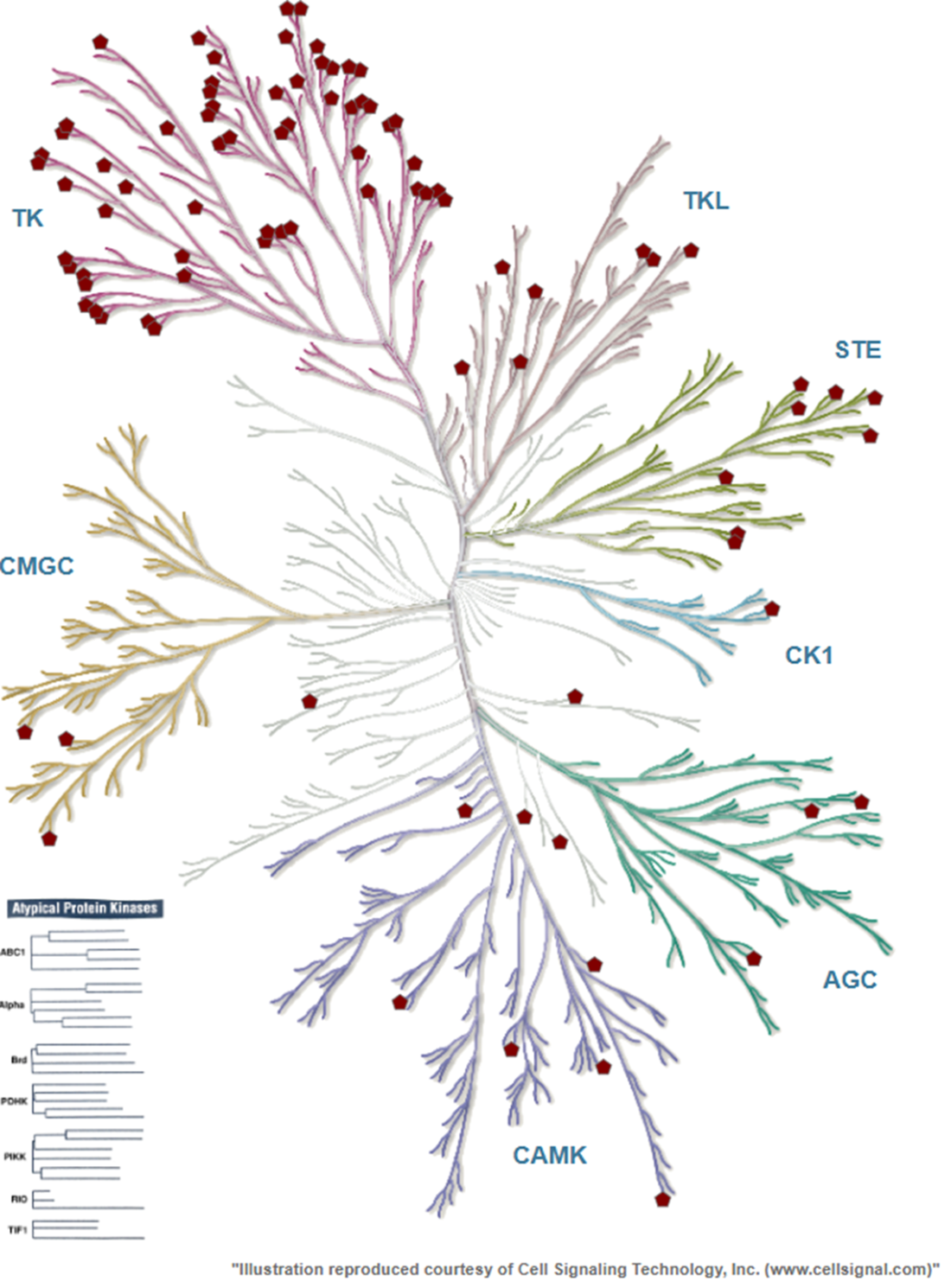
The human kinome tree groups protein kinases by sequence similarity into eight major groups, making underexplored branches and approved-drug coverage easier to inspect. section 8.1.1
