A kinase inhibitor is a compound that reduces a kinase’s catalytic or signaling activity. Kinases transfer phosphate groups from ATP to substrate proteins; that modification changes protein shape and can activate or deactivate signaling pathways. section 8.1.1
Kinases are important small-molecule drug targets in cancer and inflammatory disease. Inhibiting an enzyme can prevent its substrate from becoming a product, but suppressing a kinase may also alter many downstream cellular processes. section 8.1.1 section 1.4.1
Effective kinase-inhibitor design must balance several practical requirements:
- Achieve sufficient affinity for the intended kinase target. section 8.1.1
- Maintain selectivity across the wider kinase family, because related kinases can share highly similar binding sites. section 8.1.1 section 1.4.1
- Control off-target promiscuity, especially when compounds bind the conserved ATP-binding site. section 8.1.1
- Use computational methods when routine experimental testing against every kinase is prohibitively expensive. section 8.1.1
An enzyme-inhibition analogy
COX-1 and COX-2 produce signaling molecules involved in inflammation. NSAIDs relieve pain by inhibiting these enzymes rather than blocking receptors, although excessive COX suppression can cause side effects. section 1.4.1
Figure 8.2 Map of human protein kinases, i.e., the Manning kinome tree, clustered based on sequence similarity into eight major groups [3].
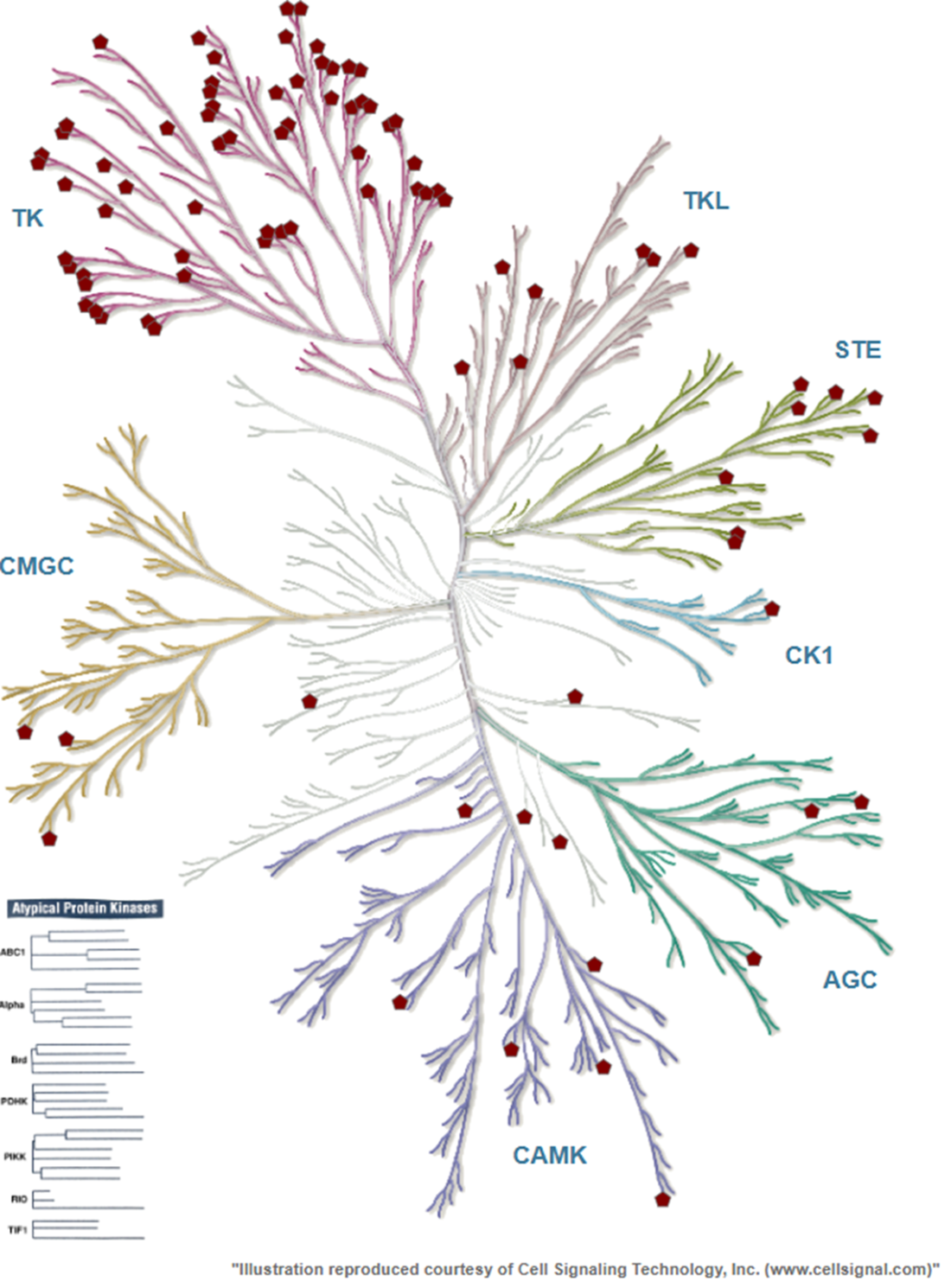
Use the kinome tree to inspect how human protein kinases cluster into eight major sequence-similarity groups and where approved drug targets are distributed. section 8.1.1
