An execution harness combines the model’s capabilities with everything around it that helps produce useful work, including tools, skills, prompts, and scaffolding. Specialized harnesses direct that capability toward different tasks, such as knowledge work or software development. section 1.4 section 2.2
The harness acts on context shaped by an intent harness. Specifications can provide a clear target for implementation and validation, reducing reliance on session memory and repeated course corrections. section 2.2 section 2.4
URL shortener
A free-form coding pass asked an agent for changes, inspected the output, and corrected it in a loop, leaving much of the intent in conversation. A specification-driven pass made the specification a durable target for implementation and validation. section 2.4
Figure 1.4 The intent harness is a level above the execution harness and helps us articulate intent to engineer context for the execution harness.
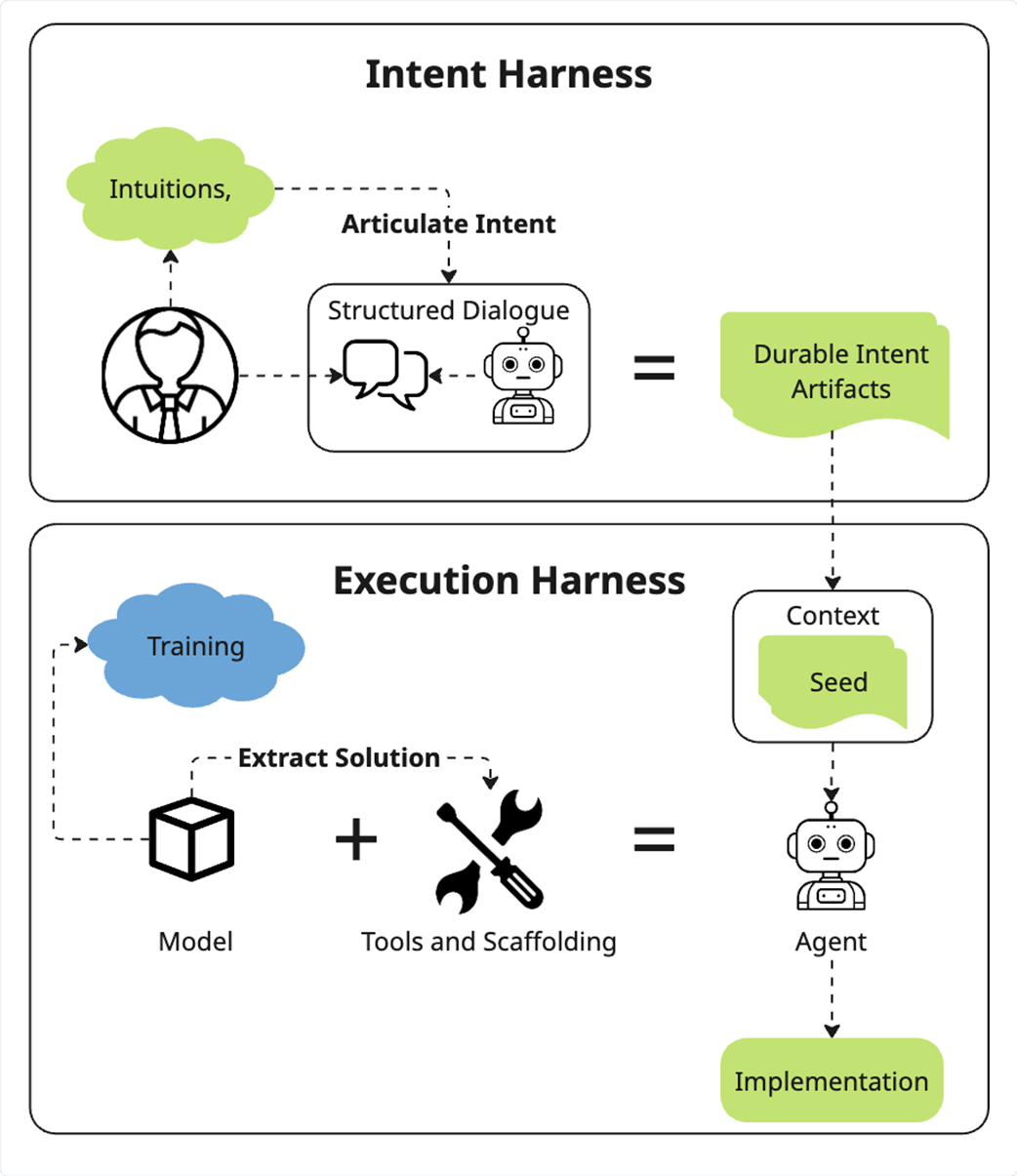
Shows how an intent harness sits above an execution harness, shaping the context that guides its work. section 1.4