Intent alignment is a shared understanding between people and agents of the intended software outcome before implementation. Specifications support that dialogue and preserve the understanding beyond the current interaction. section 2.0
A high-level prompt leaves room for an agent to interpret unstated intent; corrections then arrive through follow-up instructions. Making intent explicit in a specification gives people and agents a durable point of reference. section 2.0 section 2.3.1
URL shortener
A prompt asks for a URL shortener but leaves choices unstated. The agent assumes six-letter alphabetic codes, generates a different code for the same URL each time, and stores mappings in memory—decisions the person did not make. section 2.3.1
Figure 2.7 Mental model of vibe coding, where a lack of clear intent articulation in the instruction/prompt leaves room for interpretation mistakes, and alignment at best depends on the vibe.
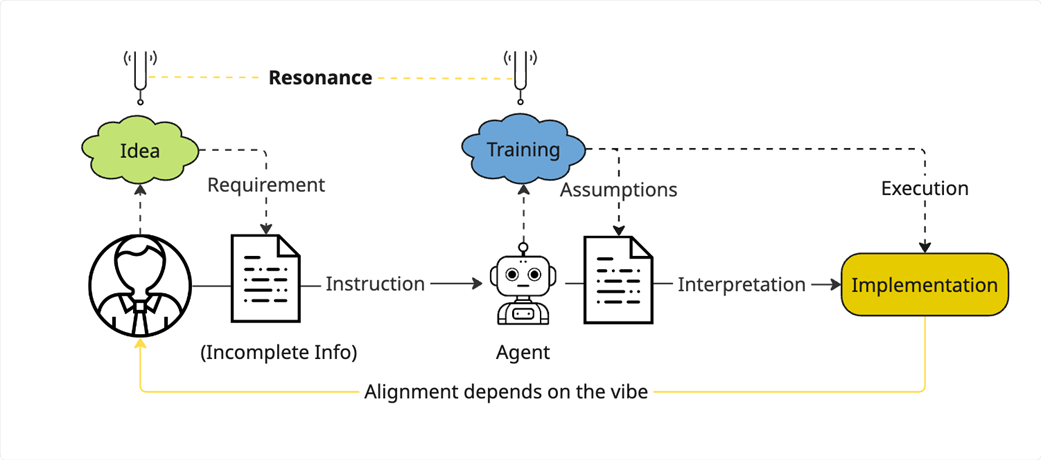
The figure depicts how unclear instructions leave room for interpretation mistakes and make alignment depend on the agent's interpretation. section 2.3.1