liveBook · Manning

Kubeflow

As explained in Distributed Machine Learning Patterns

An open-source platform for deploying and orchestrating portable, scalable machine learning workflows on Kubernetes.

Kubeflow is a platform for submitting distributed machine-learning training jobs to Kubernetes clusters. It sits above Kubernetes, while TensorFlow defines data processing, model building, and evaluation. section 8.0 section 1.4

Use Kubeflow to:

  • Run distributed model-training logic in a Kubernetes cluster. section 9.5
  • Connect model training with an end-to-end workflow orchestrated by Argo Workflows. section 8.0
  • Move from single-machine experiments toward large distributed clusters. section 1.4

Distributed model training

Train a model with TensorFlow, then execute its distributed training logic in a Kubernetes cluster through Kubeflow. In the complete pipeline, TensorFlow also provides the distributed input pipeline for Fashion-MNIST. section 9.5 section 8.10

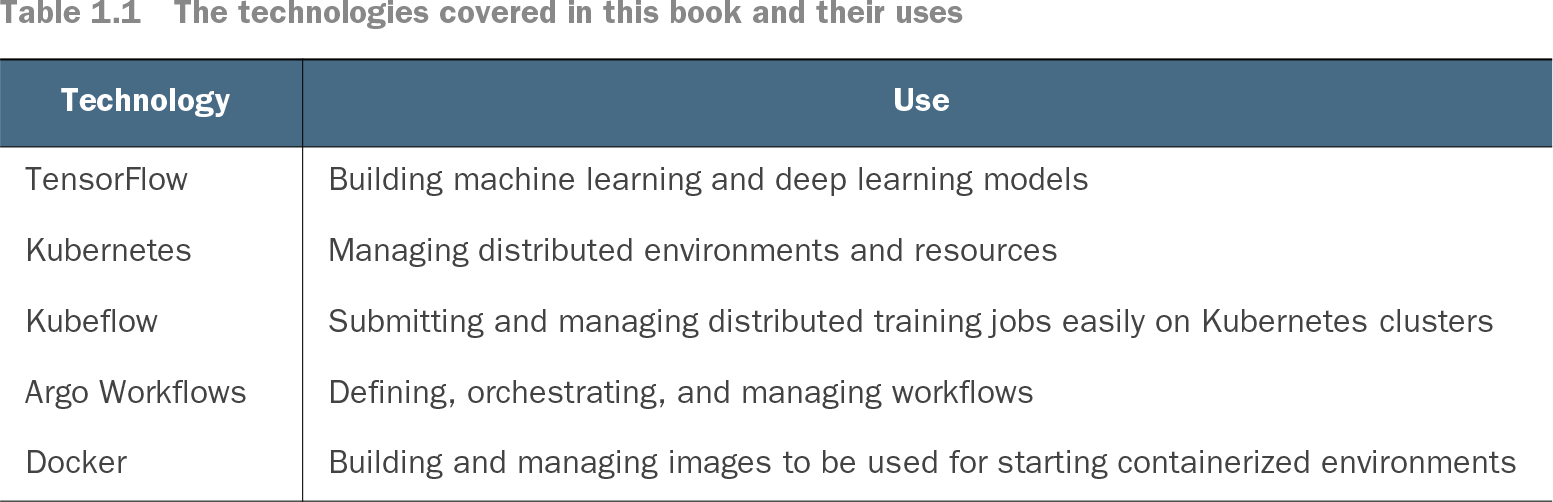
Table 1.1 The technologies covered in this book and their uses (view table figure)

Technology

Use

TensorFlow

Building machine learning and deep learning models

Kubernetes

Managing distributed environments and resources

Kubeflow

Submitting and managing distributed training jobs easily on Kubernetes clusters

Argo Workflows

Defining, orchestrating, and managing workflows

Docker

Building and managing images to be used for starting containerized environments

Compare Kubeflow with the neighboring technologies: Kubernetes manages distributed resources, TensorFlow builds models, Argo Workflows orchestrates workflows, and Docker supplies container images. section 1.4


How Distributed Machine Learning Patterns covers it

How deep it goes
Defines core terminology and provides hands-on job submission, while deferring complete implementation details to an end-to-end project.
Examples
Uses MNIST and Fashion-MNIST examples, Kubernetes clusters, TensorFlow training logic, and Argo Workflows pipelines.
What it assumes
Assumes Python machine-learning experience and some production exposure, while introducing Kubernetes and Kubeflow basics.
What you can do after
Operate distributed TensorFlow training jobs on Kubernetes and connect them to machine-learning workflows.
How it connects
Connects TensorFlow model logic, Kubernetes infrastructure, Argo Workflows orchestration, and KServe-based model serving.

Also explained in

Compare how 2 books explain Kubeflow →

Related concepts

This explainer was generated by Manning's knowledge graph from the text of Distributed Machine Learning Patterns. The section links point to the parts of the book it draws on.