liveBook · Manning

Kubeflow Katib

As explained in Designing Deep Learning Systems: A guide for software engineers

Kubeflow Katib is a Kubernetes-native system for automated machine learning experimentation and hyperparameter tuning.

Kubeflow Katib is a Kubernetes-based, portable service for automated hyperparameter optimization. It provides a practical alternative to rebuilding a generic HPO system when experiments require remote execution and reusable service infrastructure. section 5.0 section 5.4.4

A general HPO service organizes the optimization loop around several responsibilities:

  • Runs or coordinates training trials with selected hyperparameter values. section 5.3.2
  • Monitors training and records trial metrics and hyperparameter values in a trial history database. section 5.3.2
  • Passes completed trial history to a hyperparameter suggestion component, which produces the next candidates. section 5.3.2

Choosing a service over a library

When library-based HPO encounters practical limitations, switch to a service-oriented workflow. Katib is the recommended general-purpose option, while Hyperopt, Optuna, and Ray Tune support local library or framework workflows. section 5.0 section 5.4.4
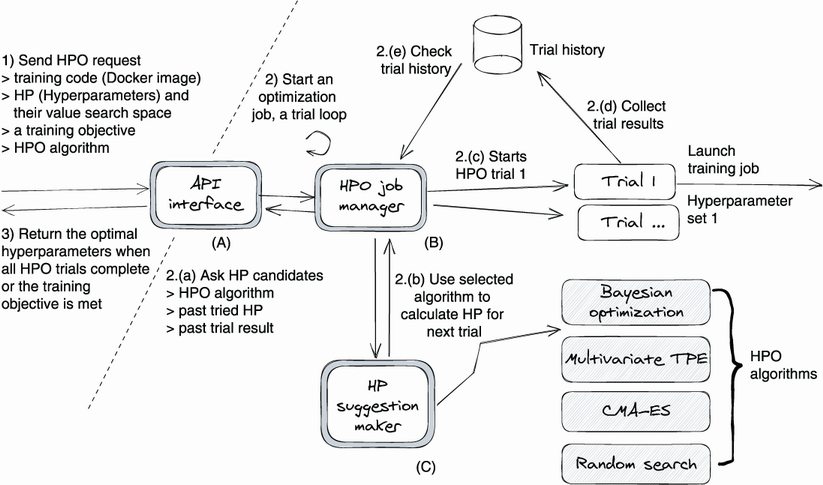
Figure 5.9 A general system design of an HPO service

Use the general HPO service design to trace how training, metric history, trial completion, and candidate suggestion fit into one optimization workflow. section 5.3.2

How Designing Deep Learning Systems: A guide for software engineers covers it

How deep it goes
Explains trial monitoring, metric history, and candidate generation at service-design level, without detailing Katib implementation.
Examples
Compares Katib with Hyperopt, Optuna, and Ray Tune across remote-service and local-library HPO workflows.
What it assumes
Builds understanding of hyperparameters and tuning while contrasting library-based and service-based workflows.
What you can do after
Apply hyperparameter optimization through Katib when library-based approaches no longer fit operational needs.
How it connects
Connects hyperparameter optimization with training jobs, trial metrics, trial history, suggestion algorithms, and Kubernetes.

Related concepts

This explainer was generated by Manning's knowledge graph from the text of Designing Deep Learning Systems: A guide for software engineers. The section links point to the parts of the book it draws on.