A Kubernetes extension adds organization-specific behavior to Kubernetes so platform teams can expose APIs for challenges beyond built-in capabilities. An environment resource can be submitted to the Kubernetes API server, where installed extensions interpret it and provision the requested environment. section 6.2 section 1.2.1
Use extensions to hide tool integration and operational complexity behind a clear contract. Before implementing one, weigh custom maintenance, testing, releases, training, and production operations against composing existing CNCF tools. section 1.2.1 section 6.3
A practical environment platform can combine:
- Environment Kubernetes resources that teams create to request isolated development environments. section 6.3
- Crossplane compositions selected through labels or selectors, allowing different environment implementations and providers. section 6.3
- vcluster to provision small, isolated Kubernetes clusters without creating custom controllers. section 6.3
- Company-specific APIs layered over Kubernetes APIs to enforce standards and integrate existing systems. section 6.2
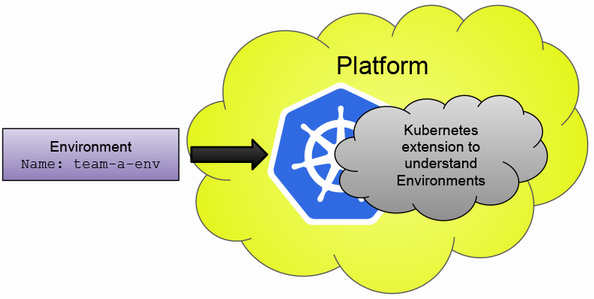
Use the architecture figure to trace how an environment resource turns Kubernetes into a platform API. section 6.2
