Laissez-faire leadership takes a hands-off approach, allowing team members to make their own decisions. It gives individuals room to act rather than directing every step. section 3.2.1
Treat this style as one option in a broader leadership toolkit. Effective lead developers combine styles and adapt their approach to the situation instead of following one formula. section 3.2.1
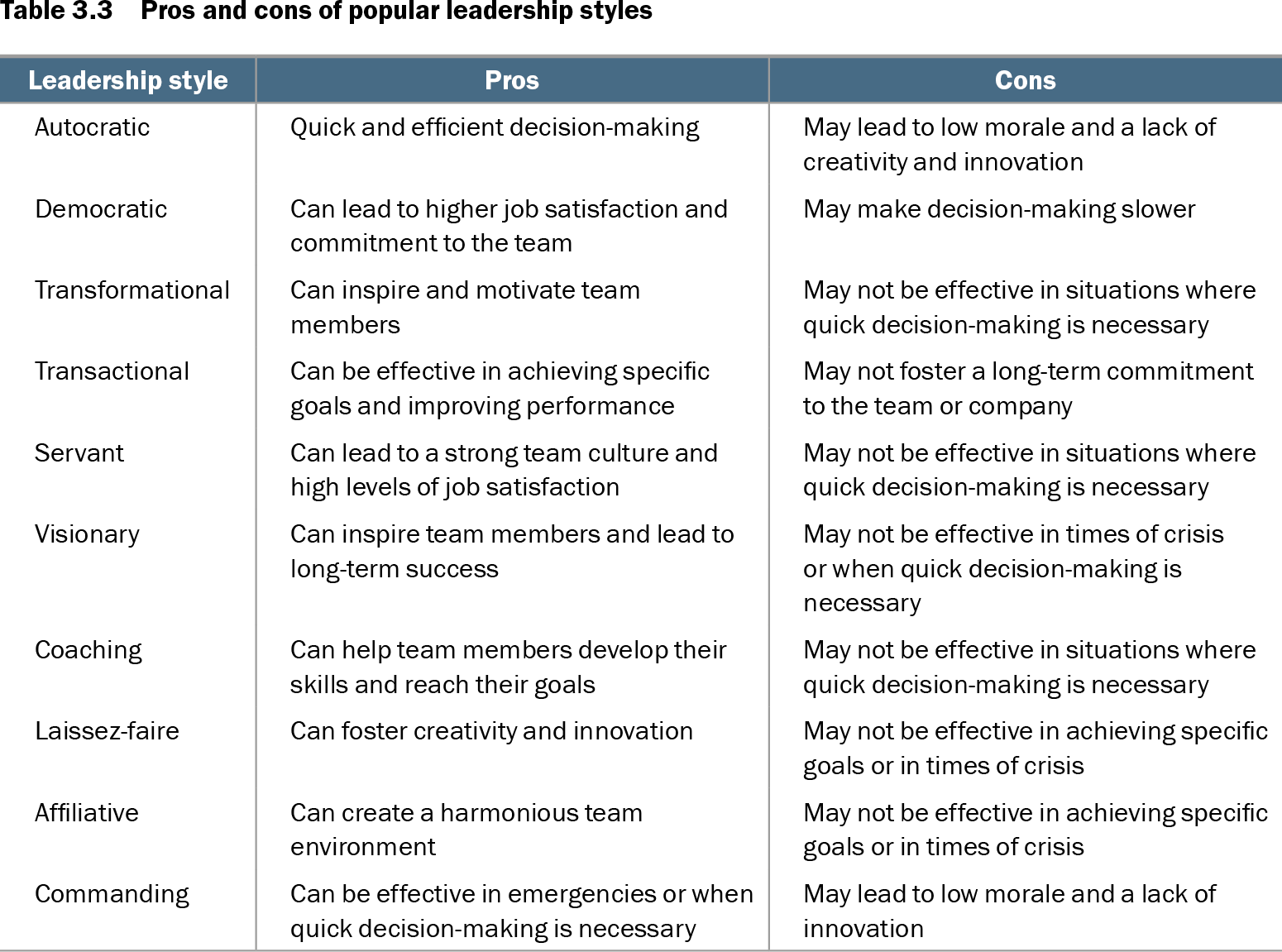
Table 3.3 Pros and cons of popular leadership styles (view table figure)
| Leadership style |
Pros |
Cons |
|---|---|---|
| Autocratic |
Quick and efficient decision-making |
May lead to low morale and a lack of creativity and innovation |
| Democratic |
Can lead to higher job satisfaction and commitment to the team |
May make decision-making slower |
| Transformational |
Can inspire and motivate team members |
May not be effective in situations where quick decision-making is necessary |
| Transactional |
Can be effective in achieving specific goals and improving performance |
May not foster a long-term commitment to the team or company |
| Servant |
Can lead to a strong team culture and high levels of job satisfaction |
May not be effective in situations where quick decision-making is necessary |
| Visionary |
Can inspire team members and lead to long-term success |
May not be effective in times of crisis or when quick decision-making is necessary |
| Coaching |
Can help team members develop their skills and reach their goals |
May not be effective in situations where quick decision-making is necessary |
| Laissez-faire |
Can foster creativity and innovation |
May not be effective in achieving specific goals or in times of crisis |
| Affiliative |
Can create a harmonious team environment |
May not be effective in achieving specific goals or in times of crisis |
| Commanding |
Can be effective in emergencies or when quick decision-making is necessary |
May lead to low morale and a lack of innovation |
Compare laissez-faire with autocratic, democratic, transformational, transactional, servant, visionary, coaching, affiliative, and commanding approaches using the strengths-and-weaknesses table. section 3.2.1