liveBook · Manning

Message log

As explained in Natural Language Processing in Action, Second Edition

A message log is a stored record of messages and conversation interactions exchanged during user sessions.

A message log stores the messages and conversation interactions exchanged during user sessions. In a chatbot, it records each session’s path through the conversation graph, creating evidence for analysis and improvement. section 12.3.3

Use a message log to:

  • Analyze what users say and identify conversations that reach a dead end instead of the goal node. section 12.3.3
  • Collect messages for intent labeling and periodically retrain the intent-recognition system. section 12.3.3
  • Guide new intents, dialog branches, and conversation-design decisions using interaction patterns and message statistics. section 12.6

Structured session context

Store a JSON context field with each message so reviewers can reconstruct the situation. A teacher bot might record a student’s grade level, completed lessons, and scores alongside the conversation. section 12.3.3

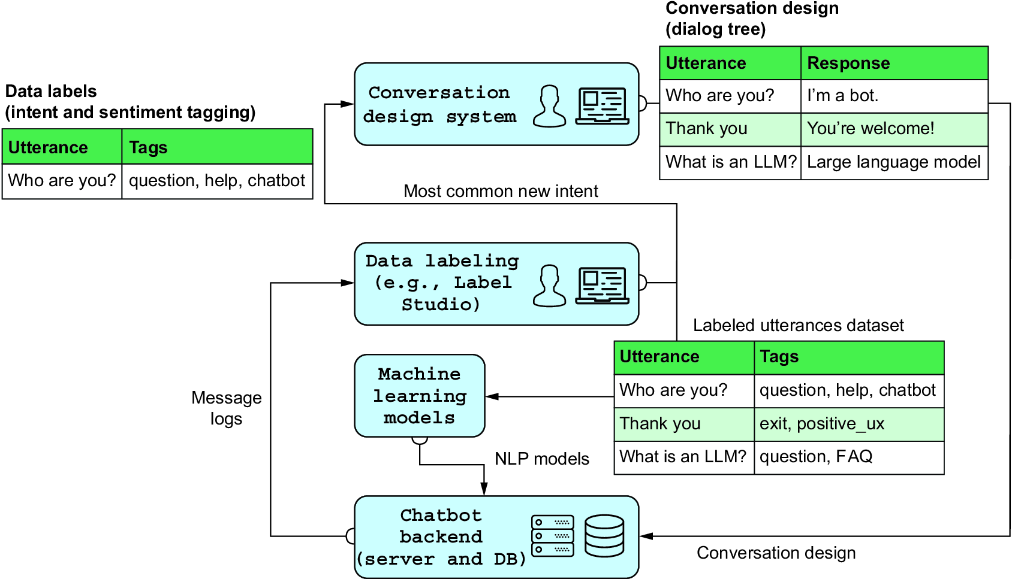
Figure 12.6 Conversation design workflow
figure

Follow the workflow from conversation design and utterance labeling through model training, backend interaction, message logging, and analysis. section 12.6

How Natural Language Processing in Action, Second Edition covers it

How deep it goes
Explains table storage, session paths, dead-end analysis, JSON context, and retraining uses without detailing schema or queries.
Examples
Uses MessageLog tables, JSON session context, dead-end conversations, and teacher-bot student records as concrete examples.
What it assumes
Assumes familiarity with chatbot sessions and conversation graphs while introducing message storage and contextual records.
What you can do after
Diagnose user interactions, label utterances, retrain intent recognition, and prioritize new dialog branches from message evidence.
How it connects
Connects conversation graphs, relational databases, intent recognition, NLU, conversation design, and data labeling.

Related concepts

This explainer was generated by Manning's knowledge graph from the text of Natural Language Processing in Action, Second Edition. The section links point to the parts of the book it draws on.