liveBook · Manning

Latency optimization

As explained in GPU Programming with Triton

A latency-optimized design minimizes the time required to complete an individual task or thread of execution.

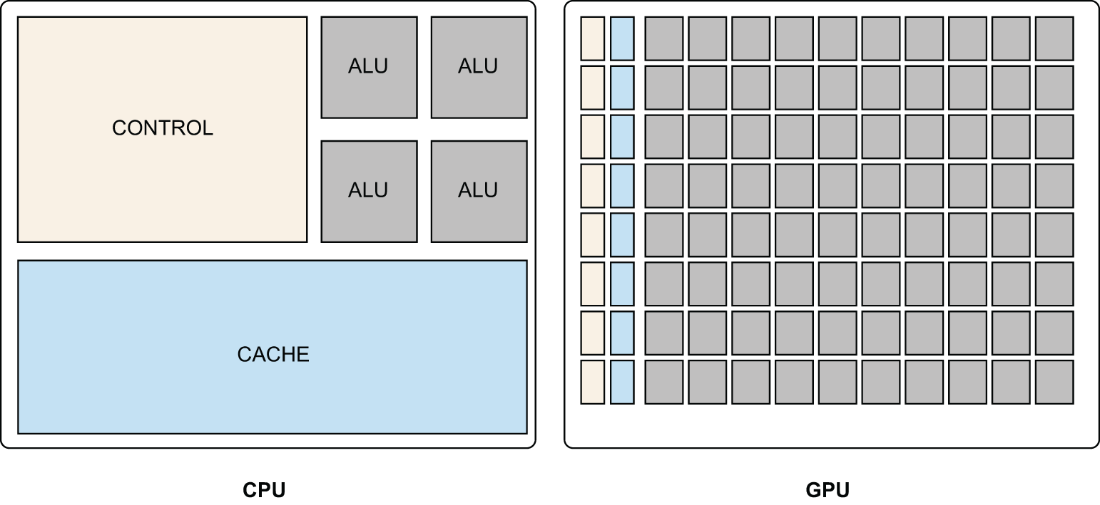
A latency-optimized design minimizes the time needed to complete one task or thread. CPUs support this goal with large caches and sophisticated control logic, while GPUs prioritize throughput by devoting more chip area to arithmetic units. section 1.3.2

Figure 1.5 GPUs dedicate more of their area to compute and less to control and caching.
Growth in training data

Compare how CPU and GPU chip area is allocated to caching, control, and computation. section 1.3.2

How GPU Programming with Triton covers it

How deep it goes
Explains the design goal and names cache and control mechanisms without detailing their implementation.
Examples
Illustrates CPU-GPU design differences with a chip-area figure comparing compute, cache, and control.
What you can do after
Understand how CPU chip resources support fast individual tasks, unlike GPU resources optimized for aggregate throughput.
How it connects
Connects CPU caches and control logic with GPU throughput optimization and data-parallel execution.

Related concepts

This explainer was generated by Manning's knowledge graph from the text of GPU Programming with Triton. The section links point to the parts of the book it draws on.