A neural network layer is a computational stage that transforms an input representation into an output representation through connected units and parameters. Layers organize neurons so that each neuron receives inputs from the previous layer and sends outputs to the next, creating a directed flow of information. section 8.2.3
A typical network assigns distinct roles to its layers:
- The input layer receives raw or processed data and passes it onward. section 8.2.3
- Hidden layers perform calculations, extract features, and learn attributes used for later decisions; networks may contain a few to hundreds of them. section 8.2.3
- The output layer combines preceding results to produce a prediction, such as object identification or image classification. section 8.2.3
Image classification flow
Feed raw or processed images into the input layer. Hidden layers calculate and extract attributes from the images, then the output layer produces the task result, such as identifying an object or classifying the image. section 8.2.3
Figure 8.4 A typical neural network with neurons and input, hidden, and output layers
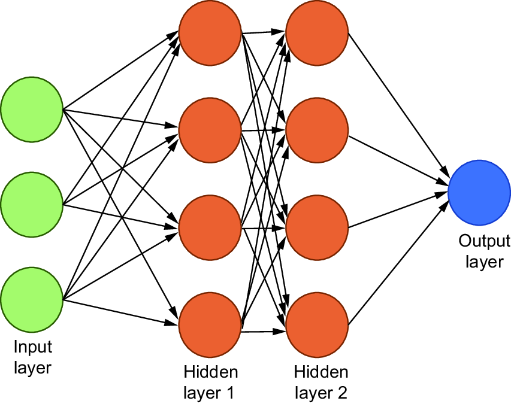
Use the network diagram to trace connections from input units through hidden layers to the final output. section 8.2.3






