Lazy loading retrieves related data when code first accesses a navigation property, such as person.Address. That convenient-looking property read can secretly send a database query across the network. section 8.3.2
The convenience has production costs:
- A slow network or exhausted connection pool can make a simple property access stall a request and end in a timeout. section 8.3.2
- Accessing user.Orders in a loop over 1,000 users can issue 1,000 extra queries after the initial query—the N+1 problem. section 8.3.2
- For performance-critical paths, make data access explicit: use eager loading or DTO queries to fetch the needed object graph together. section 8.3.2
Figure 8.7 The N+1 Problem: Fetching data in a loop is like making a separate trip to the kitchen for every single french fry. Always fetch in batches!
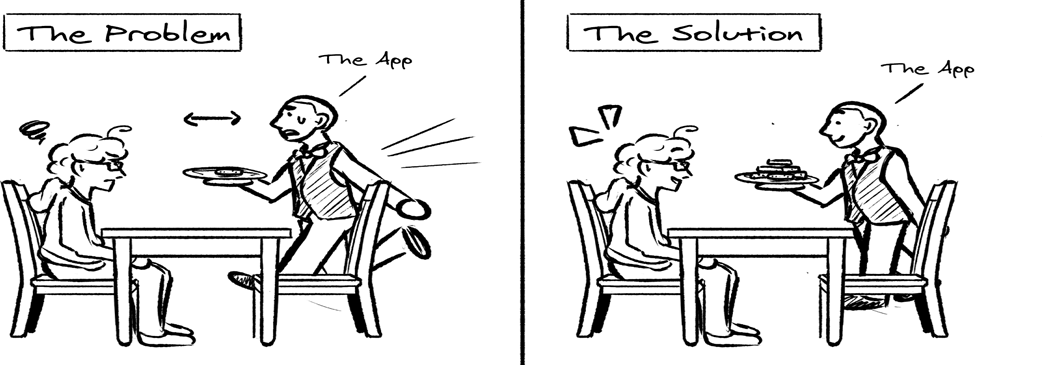
The kitchen-trip analogy illustrates why fetching related data one item at a time creates unnecessary round-trips. section 8.3.2











