Leading language is wording that suggests a preferred answer or embeds assumptions about respondents. In self-report measures, it can bias responses and reduce data quality. section 6.2.2 section 6.4
Improve question wording by:
- Replacing suggestive wording such as “Wouldn’t you agree that our software saves time and effort?” with a neutral agreement question. section 6.2.2
- Avoiding negative framing, which can introduce bias; ask how often respondents have trouble using software instead of how often they hate using it. section 6.2.2
- Separating distinct topics and avoiding emotionally charged or judgmental terms, while using neutral and objective language. section 6.2.2
Neutral software survey wording
Change “Wouldn’t you agree that our software saves time and effort?” to “To what extent do you agree that our software saves you time and effort?” The revised wording removes the implied desired answer. section 6.2.2
Figure 6.7 How do you think the wording of these questions might affect the responses you receive?
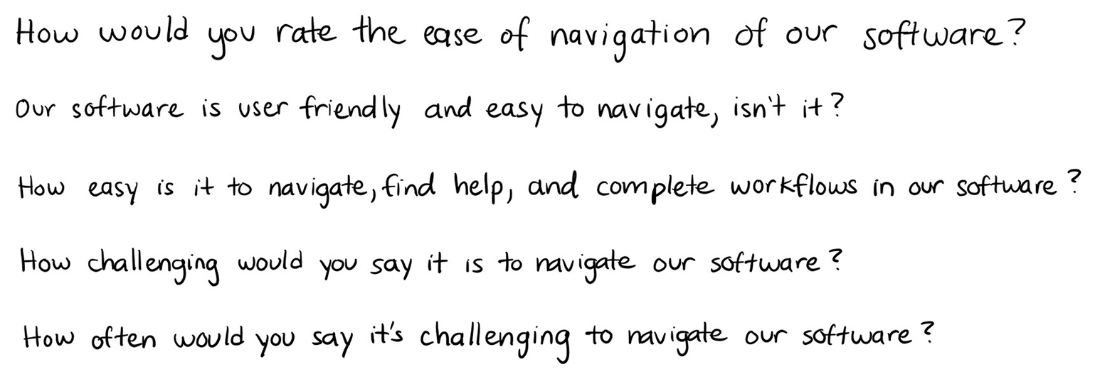
Use the figure to compare question wordings and consider how presentation can change the responses people provide. section 6.2.2
