Lean storage minimizes unnecessary retained data, storage consumption, and accumulated operational waste. Keeping less data reduces hardware needs, energy use, and ongoing system pressure. section 8.4.3 section 8.6
Customer table review
Review a PostgreSQL customer table that stores names, addresses, and one of two profile types. Inspect data types, field sizes, and redundant information, then improve and normalize the design. The practical question is not only what can be removed, but what should never be stored unnecessarily. section 8.4.3
Apply deletion and retention decisions carefully: privacy laws may grant deletion rights, while finance, healthcare, employment, or other legal duties may require data to remain for a minimum period. section 8.4.3
Review storage for oversized fields, redundant records, inefficient queries, unbounded caches, and unnecessarily large datasets. Prefer the smallest safe improvement when cleanup could harm clarity or compliance. section 8.5.2
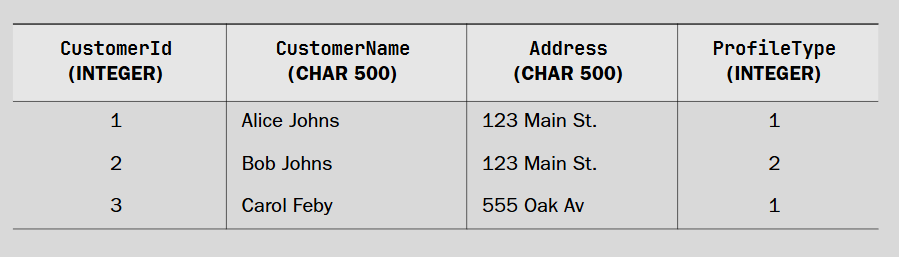
Inspect the customer-table exercise while comparing field sizes, data types, redundancy, and normalization choices. section 8.4.3
