Linear reasoning follows one sequence of logic. Early assumptions shape what follows: once a framing is accepted, later analysis can reinforce it, while alternatives are judged against the original anchor. section 4.3.2
An architecture review
The team accepted a binary choice between rewriting and refactoring. Diagrams, estimates, and risk assessments became more detailed, but all remained anchored to that framing; other structures never became visible. If a different approach later proved better, the team might experience the outcome as failure rather than as the result of a limited search. section 4.3.2
A single line can create an illusion of clarity when the problem itself is uncertain. If a discussion heats up unusually quickly, the solution space may have collapsed too early, leaving people to defend the only options on the table. Make distinct alternatives visible before comparing them; branching can expose assumptions and reduce premature convergence. section 4.5.1 section 4.2
Figure 4.1 Linear reasoning compresses possible paths. Structured branching introduces possibilities before convergence.
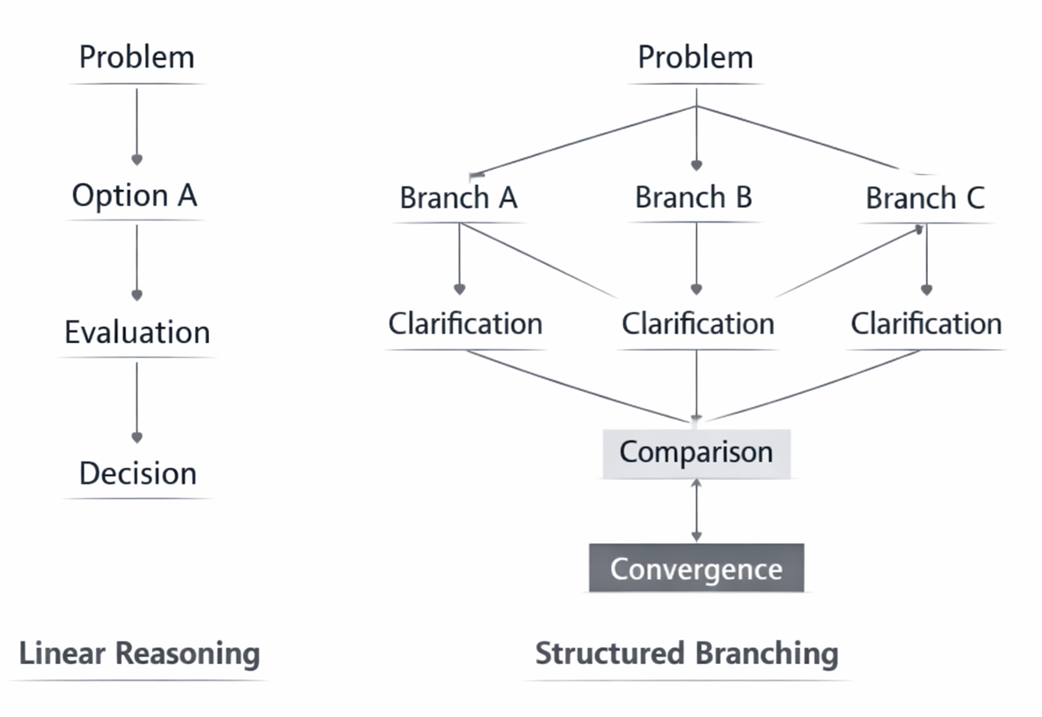
The figure contrasts a compressed set of possibilities in linear reasoning with branching before convergence. section 4.2