Register is the informal set of rules that shapes how you communicate with someone. With Claude, it means building a clear, specific way to frame requests around the outcome you want—not following a rigid prompt formula. section 2.2
Make the signal in a prompt easy to find:
- State the goal, relevant context, constraints, and desired format. section 2.9
- Include context Claude cannot take for granted, such as the date, location, or tech stack when relevant. section 2.9
- Be brief and specific; prompts need not be polished paragraphs, but should contain what the model needs without extra noise. section 2.2
One person, different register
Talking to a child about the school day calls for a different tone and level of detail than speaking at an engineering standup. With Claude, adapt your wording to the task and give the context needed for a useful response. section 2.2
Figure 2.2 A wordy, unfocused prompt where the signal is buried in noise
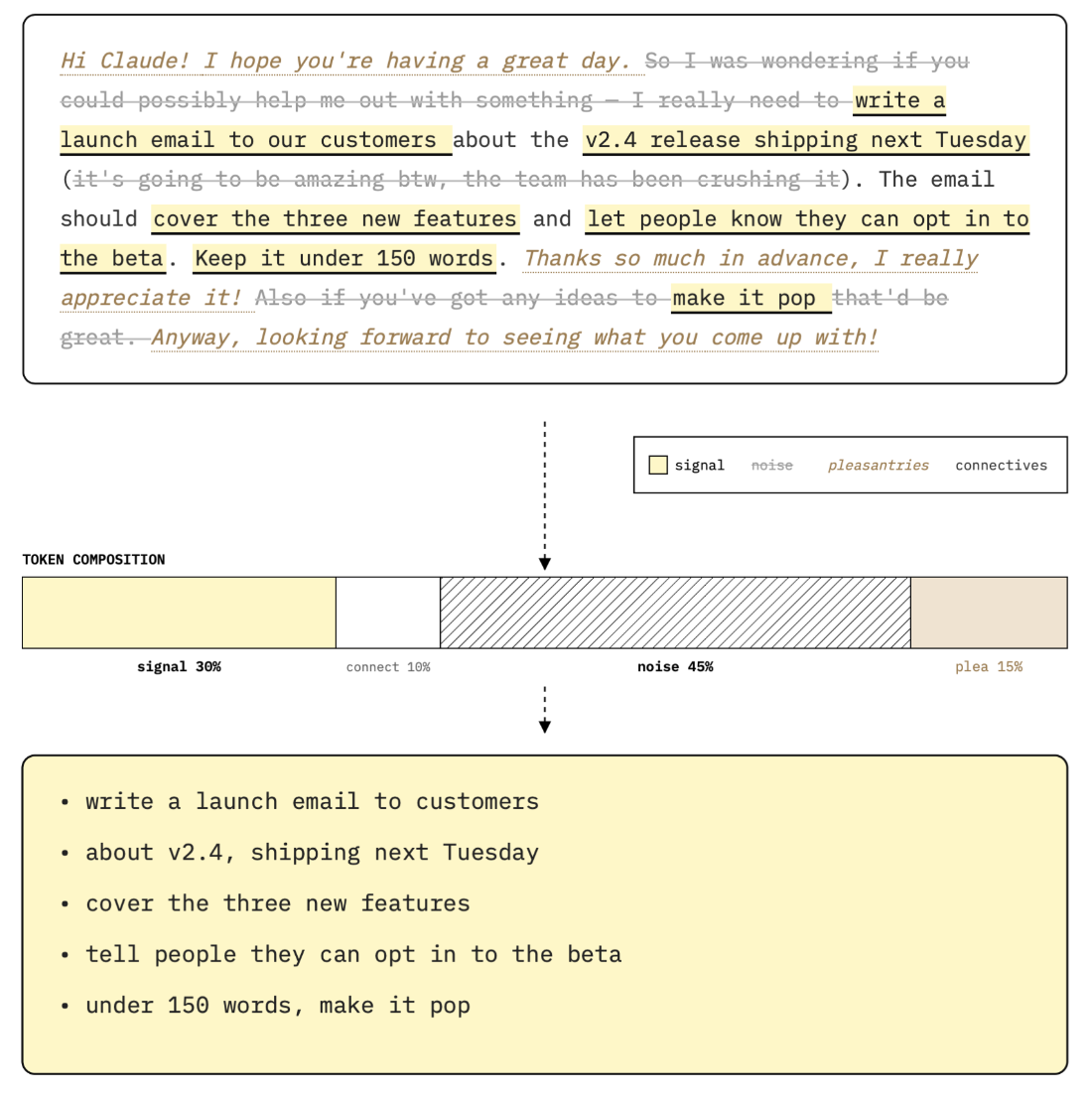
A visual example of a wordy prompt with its signal buried in noise. section 2.2