liveBook · Manning

Linting

As explained in React in Depth

Linting is the automated analysis of source code to identify coding errors, undesirable practices, and stylistic violations.

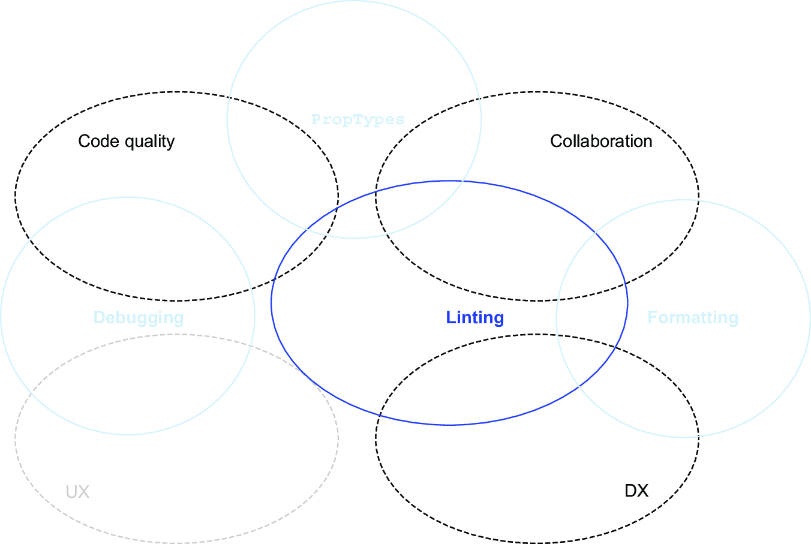
Linting automatically analyzes source code to catch minor programmatic, stylistic, and bad-practice problems with minimal effort. It supports code quality, collaboration, and developer experience, especially as projects and teams grow. section 4.0 section 4.1

Linting can flag problems such as:

  • Duplicate keys in object literals caused by language disambiguation or other JavaScript quirks. section 4.1
  • Inconsistent return types within a function, using best-practice rules. section 4.1
  • Missing stylistic details such as a newline at the end of a file. section 4.1
Figure 4.2 Linting affects several aspects of software development, including code quality, collaboration, and DX.
figure

Shows how linting contributes to code quality, collaboration, and developer experience. section 4.1


How React in Depth covers it

How deep it goes
Defines linting and illustrates rule categories, but does not detail ESLint configuration or custom rule implementation.
Examples
Uses duplicate object keys, inconsistent return types, and missing final newlines as representative linting targets.
What you can do after
Apply ESLint-style checks to enforce conventions and reduce minor errors in source code.
How it connects
Connects linting with ESLint, code formatting, code quality, collaboration, and developer experience.

Also explained in

Compare how 8 books explain linting →

Related concepts

This explainer was generated by Manning's knowledge graph from the text of React in Depth. The section links point to the parts of the book it draws on.





