Lived experience is first-person contact with the world through perceiving, acting, and encountering consequences. In humans and animals, experience is more than stored information: continuous interaction reshapes behavior over time. Commonly used language models have training data, context, and sometimes tools, but do not carry experience forward in the same sense. section 9.1.2 section 9.4.3
This distinction matters when judging intelligence. A language model can organize information and produce useful answers, so its observable performance satisfies some outward criteria for intelligence. Performance alone, however, does not establish that the system has the experience, intention, or continuous interaction associated with those capacities in humans and animals. This need not be a permanent limitation of AI. section 9.1.2
Critics also distinguish a stable lived perspective from the ability to speak in the first person. A model may say “my answer” or maintain a persona without having a body, a history that matters to it, or continuing concerns. On this view, describing or acting within the world does not by itself establish a position from which the world matters to the system. section 9.4.3
Figure 9.10 Embodied interaction and cognition. Through repeated interaction and consequences, an agent can develop a world model, exercise agency, and represent itself within the environment. These capacities remain closely connected, each shaping and constraining the others.
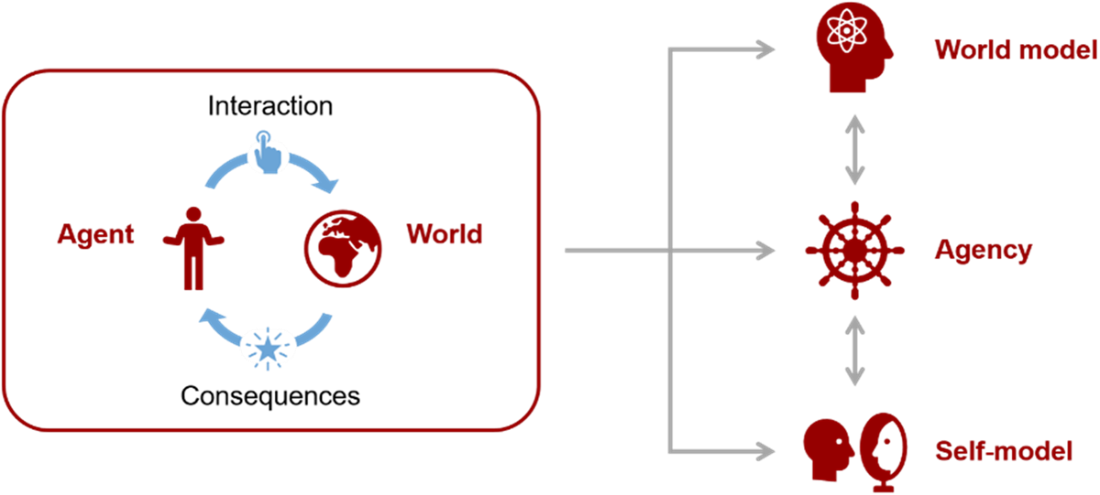
The diagram connects repeated interaction and consequences with a world model, agency, and self-representation, clarifying the capacities at issue in arguments about lived perspective. section 9.4.3
Lived experience is also central to a debate about meaning. If meaning requires words to be grounded in experience, language models lack that kind of understanding. If meaning can also consist in relationships among concepts, their learned patterns may support a different, statistical form of semantics. The distinction cautions against both equating fluent language with human understanding and dismissing learned structure as mere symbol manipulation. section 1.5.7
Relating place names
A language model can relate “Paris” and “France” to many other words in ways that approximate the relational structure of understanding. Those relations do not establish human-like knowledge of the places through perception and experience. section 1.5.7
