An LLM agent framework is reusable software infrastructure for assembling and operating LLM-centered agents. It supplies components such as tools and LLM backbones, while its processing loops and memory systems provide the underlying machinery. section 1.7
A framework can organize components into modules for:
- Base definitions, tool implementations, and LLM implementations. section 1.7
- Agents and processing loops, memory, and subagents. section 1.7
- MCP, Agent Skills, and A2A support for tools, reusable workflows, and agent-to-agent interaction. section 1.0 section 1.11
Building these components from scratch exposes how agent frameworks work under the hood. An educational framework can use sensible, ergonomic designs without targeting production performance. section 1.7
Figure 1.11 The difference between LLM agent framework developers and application developers
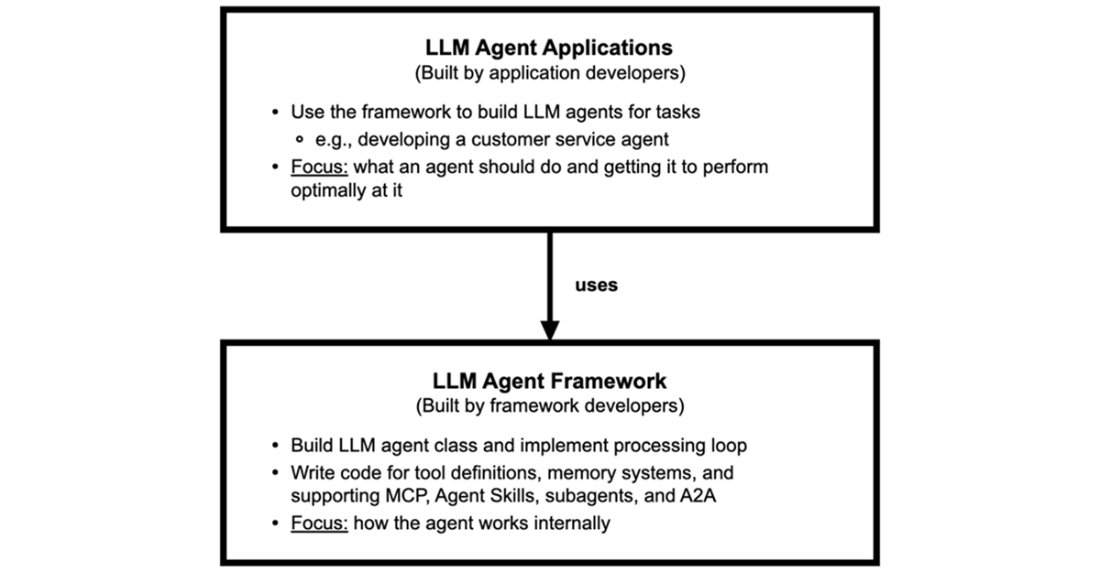
Compare the responsibilities of application developers and framework developers. section 1.7
Figure 1.12 A first look at the llm-agents-from-scratch framework that we’ll build together.
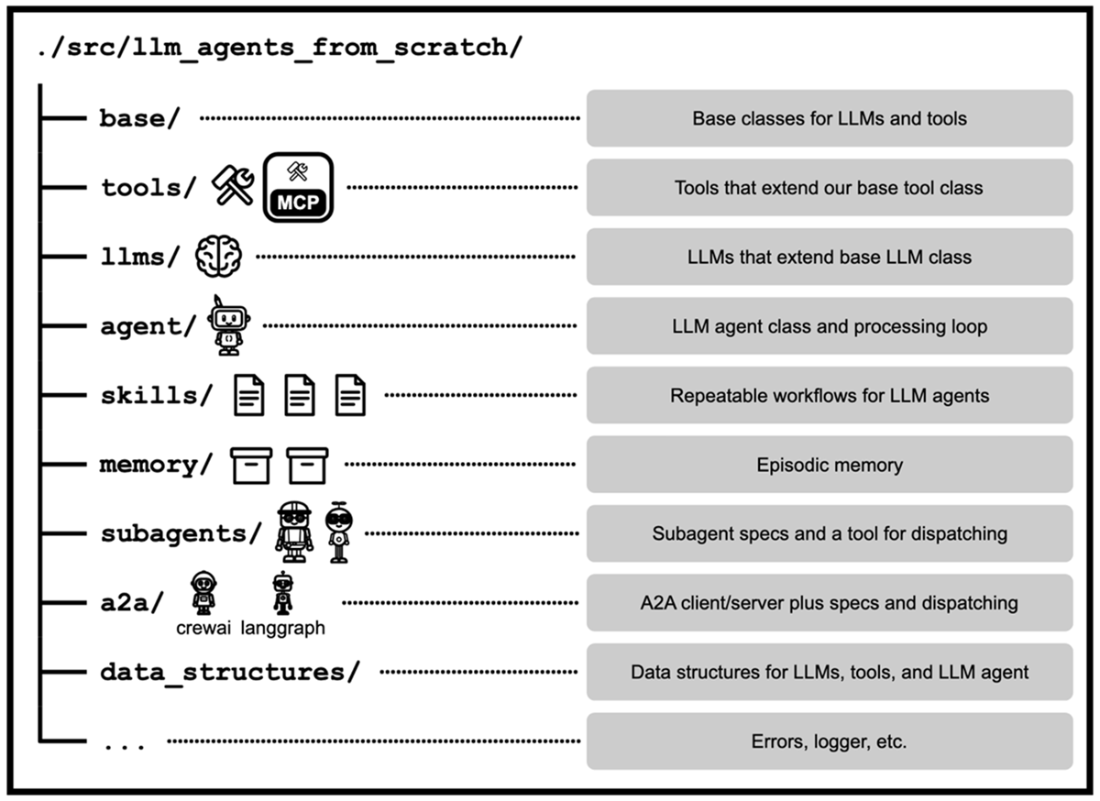
See how the framework's components are organized into modules. section 1.7
