liveBook · Manning

Logical object

As explained in Think Distributed Systems

A logical object is an abstract entity whose representation or storage may be divided among multiple physical objects.

A logical object is the single thing a system intends to represent, even when its representation or storage is divided among multiple physical objects. Replication asks whether physical entities still represent the same logical item; partitioning divides one logical object into disjoint physical objects. section 8.2 section 7.2

An encyclopedia in volumes

An encyclopedia is one logical object, while its alphabetically organized volumes are physical objects containing disjoint subsets of entries. The arrangement makes lookup possible, but uneven volume sizes, uneven demand, and cross-references create practical challenges. A software dataset can use the same model by distributing partitions across nodes. section 7.1

Figure 7.1 Encyclopedias and volumes
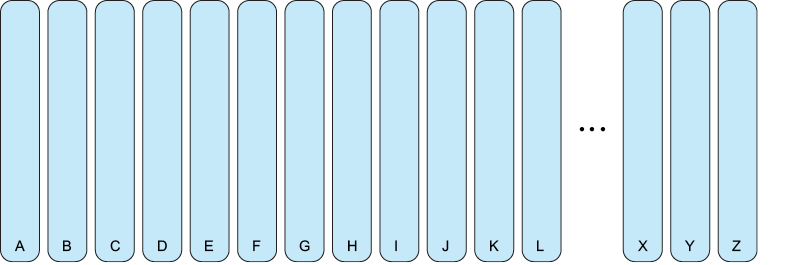
A row of rectangular objects with letters

AI-generated content may be incorrect.

Use the figure to visualize one logical encyclopedia represented by multiple physical volumes. section 7.1
How Think Distributed Systems covers it

How deep it goes
Defines the logical–physical distinction and illustrates partitioning, while stopping short of implementation mechanisms.
Examples
Uses encyclopedia volumes, software partitions, and multiple editions or copies of SICP to distinguish logical from physical objects.
What you can do after
Evaluate whether multiple physical items represent one logical item and recognize when partitioning distributes storage or demand.
How it connects
Connects logical objects with replication, consistency, partitioning, distributed systems, nodes, and big data.

Related concepts

This explainer was generated by Manning's knowledge graph from the text of Think Distributed Systems. The section links point to the parts of the book it draws on.