liveBook · Manning

Logical layer

As explained in Grokking Software Architecture

Logical separation organizes code into distinct responsibility-based groups without requiring separate deployment locations.

A logical layer groups code by responsibility, such as presentation, business logic, and data access. It describes how code is organized, not where it runs. section 4.2.3

Keep code structure and deployment structure separate:

  • Layers are logical groups of code; tiers are physical deployments on different machines or processes. A three-layer app can run on one server or across three tiers. section 4.2.3
  • Running presentation code on ten servers to handle traffic is horizontal scaling, not ten tiers. A new tier means crossing a network boundary to another responsibility. section 4.2.3
Figure 4.2 Layers are a logical separation, while tiers are a physical separation.
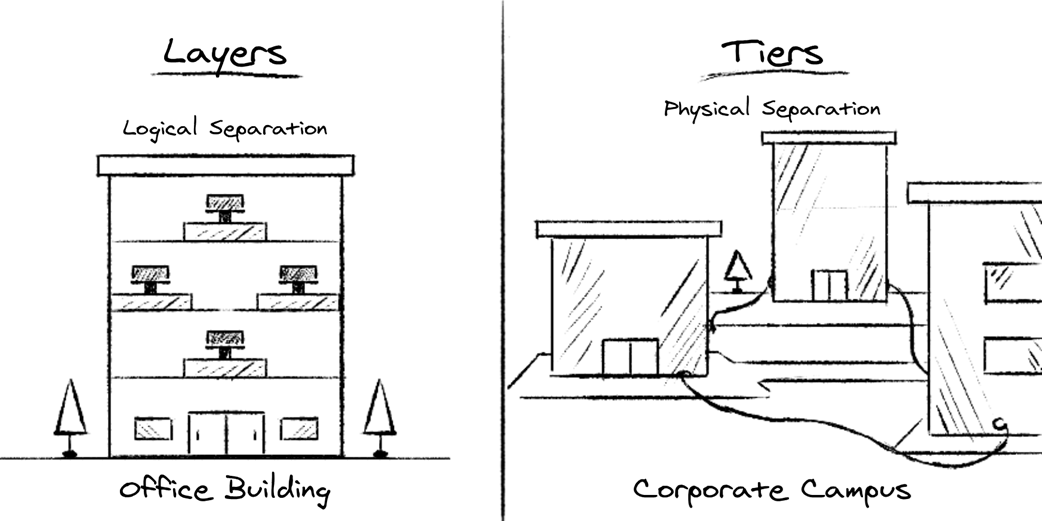
Use the diagram to compare logical layers with physical tiers. section 4.2.3

How Grokking Software Architecture covers it

How deep it goes
Defines layers against tiers and explains deployment distinctions, but defers folder layouts and enforcement techniques.
Examples
Contrasts single-server and multi-tier deployments and warns that horizontally scaling presentation servers does not create tiers.
What you can do after
Understand whether a change affects code organization or deployment structure, and distinguish scaling from adding a tier.
How it connects
Connects layered architecture with separation of concerns, presentation, business logic, data access, and infrastructure.

This explainer was generated by Manning's knowledge graph from the text of Grokking Software Architecture. The section links point to the parts of the book it draws on.