Machine language is the processor-executable form reached after higher-level code passes through compilation. In V8, JavaScript does not jump directly to final machine code: frequently executed functions move from bytecode through baseline compilation toward highly optimized machine code. section 6.6.2
The pipeline changes representation and optimization level as execution data accumulates:
- Ignition compiles parsed functions into bytecode, a simplified instruction set intended for the runtime rather than human readers. section 6.6.2
- Feedback slots record type information for individual instructions; stable numeric inputs can support optimization, while a string input can invalidate prior assumptions. section 6.6.2
- Sparkplug and Maglev provide baseline machine-code stages, while TurboFan produces highly optimized machine code for sufficiently hot functions. section 6.6.2
A small addition function
For function add(a, b) { return a + b; }, generated bytecode loads the second argument, adds the first through a feedback slot, and returns the accumulator. Repeated numeric calls can enable optimization; changing the input type can force V8 to restart with new instructions. section 6.6.2
Figure 6.1 The V8 Compilation Pipeline
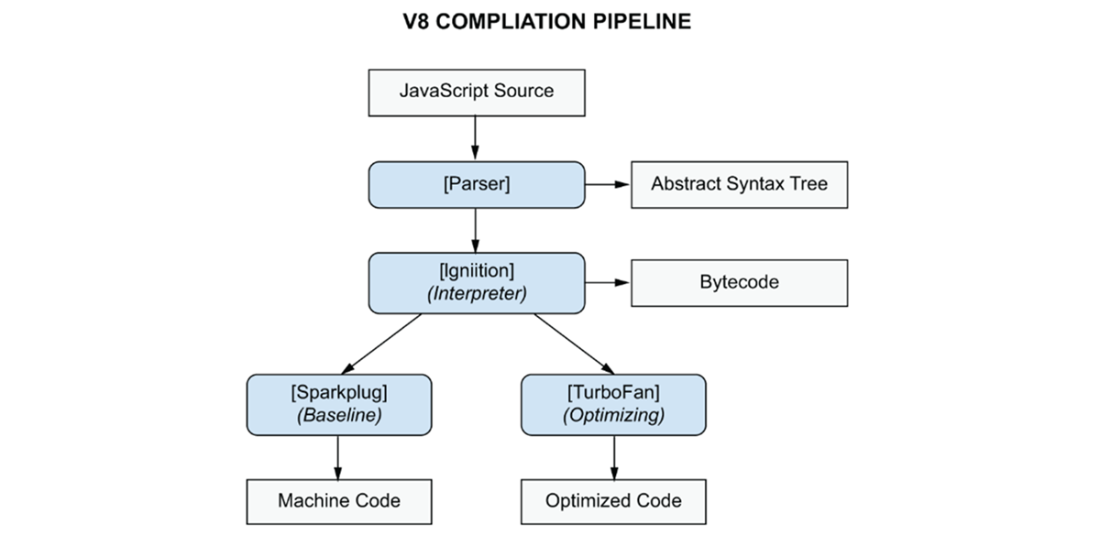
Use the pipeline figure to trace movement from lazy parsing through interpretation, baseline compilation, and optimized machine code. section 6.6.2

