A machine learning project is an organized effort to solve a business problem with a system that uses models built from data. Unlike a conventional software project, it must account for the quality and meaning of its data, measure model behavior, and manage models after deployment. Domain needs, users, and stakeholders shape the system—not just the model. section 1.0 section 1.2 section 1.6
Reduce delivery risk in stages:
- Before committing, establish whether the project is useful and feasible. Clarify stakeholder expectations, business and model-performance requirements, available data, likely effort, and the team and infrastructure needed. section 2.0
- Check how data will be accessed and prepared. Identify security, privacy, ethical, and architectural requirements early; they can change both cost and viability. section 2.8
- Organize delivery into sprints with backlogs and completion checklists. Record decisions and progress so the team can share knowledge and later maintain and govern the production system. section 1.4
- Verify data access, refine business understanding, establish versioning and pipelines, and test the initial data flow. Evaluate models technically and against business needs before deciding how to use them. section 5.0 section 1.4
A proposal is also a decision point, not merely a bid to win. Build a factual case for a price and timeframe; push back or walk away when the work is unlikely to succeed. Once underway, carry ethical evaluation, process control, and documentation through to production rather than treating them as final checks. section 3.6 section 1.4
A project in motion
The Bike Shop project moves from a successful pre-project bid into delivery. Its first sprint verifies access to the data, revisits business understanding, and starts the pipelines and tests that will supply a dataset to the team. section 3.6 section 5.0
Figure 1.2 Drivers of complexity in an ML project: the domain, the data, and the models
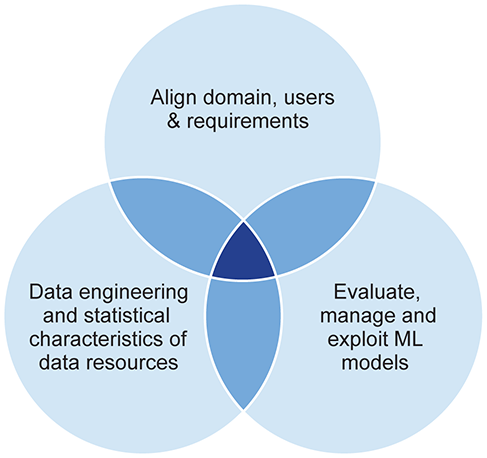
The diagram groups three sources of project complexity—domain, data, and models—so none is mistaken for the whole project. section 1.2
