A machine-learning-suggested edit proposes a source-code modification in response to review context. It helps authors act as first reviewers and helps reviewers express changes they recognize but cannot easily formulate. section 13.3
Common approaches include:
- Run Qodo’s /improve command for maintainability and best-practice suggestions; use --extended to segment larger pull requests. section 13.3
- Use learned review patterns and helpfulness ratings to generate edits addressing recurring review comments. section 13.3
- Analyze relationships among code elements before generating context-sensitive recommendations for identified issues. section 13.3
A practical review loop
An author runs /improve before requesting review, examines the proposed maintainability change, and decides whether to apply it. A reviewer can instead use the suggestion to articulate a needed modification. section 13.3
Figure 13.4 Output of Qodo /improve command with the --extended flag
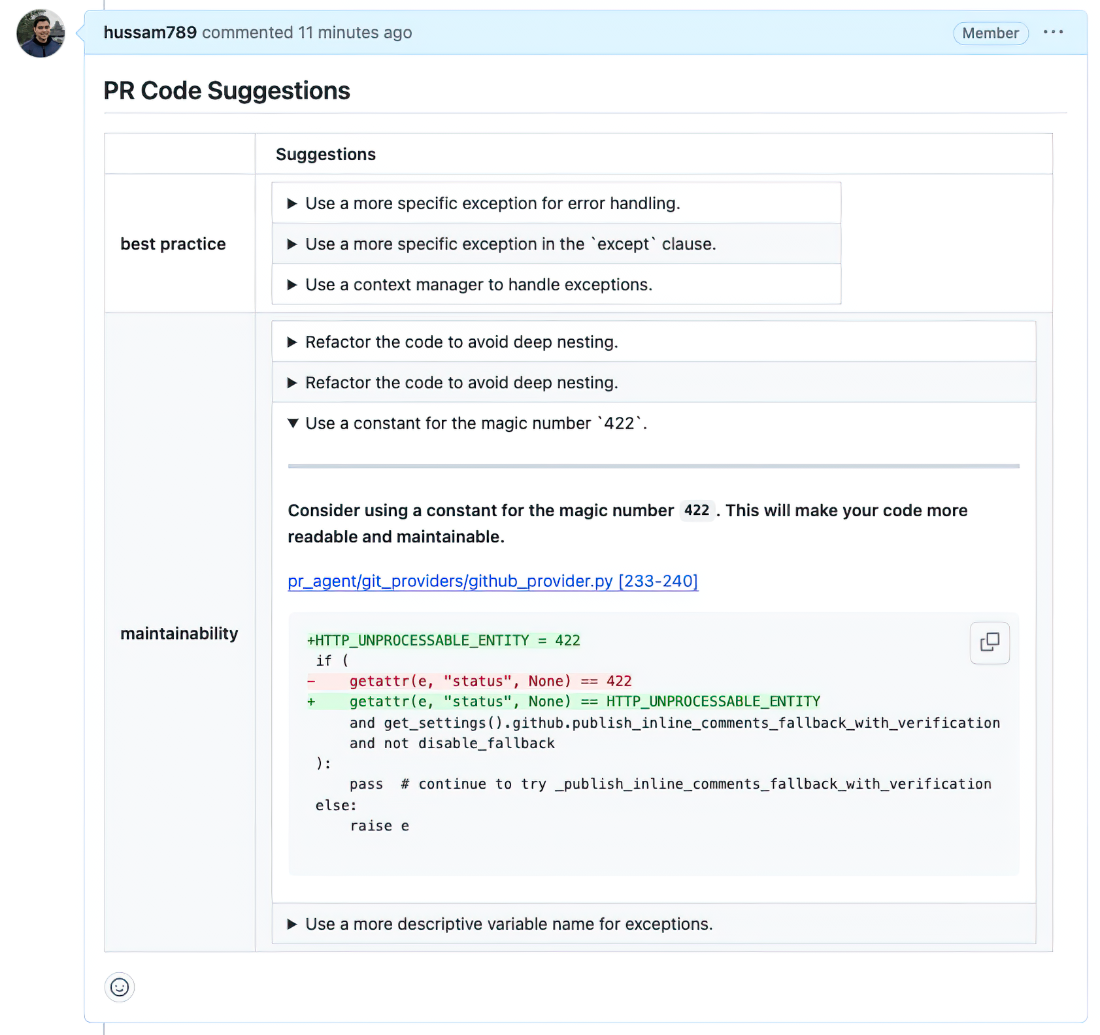
Inspect the extended Qodo /improve output for an example of proportionate suggestions on a larger pull request. section 13.3
