A click handler may finish while another click is already waiting. The waiting handler does not interrupt the first: each macrotask is a discrete unit of work that runs on its own turn of the event loop. Macrotasks are also called tasks. section 13.1 section 13.4
What counts as a macrotask?
- Running mainline JavaScript, creating the main document object, and parsing HTML. section 13.1
- Handling page-load, input, network, or timer events, and changing the current URL. section 13.1
The distinction matters when a macrotask queues a microtask. Promise callbacks are microtasks: after the current task finishes, the event loop processes the microtask queue before moving to another macrotask or allowing a re-render. A queued microtask can therefore run ahead of an older, waiting click event. section 13.1 section 13.1.2
Two clicks and a resolved promise
A first click handler calls Promise.resolve().then(...) and keeps running. Meanwhile, a second click waits as a macrotask. Once the first handler ends, the promise callback runs before the second click handler—even if that click was queued earlier. The promise callback does not interrupt the handler that created it. section 13.1.2
Figure 13.9. A page can be re-rendered between two macrotasks (mainline JavaScript execution and first click handler), while it can’t be rendered before a microtask is executed (before the promise handler).
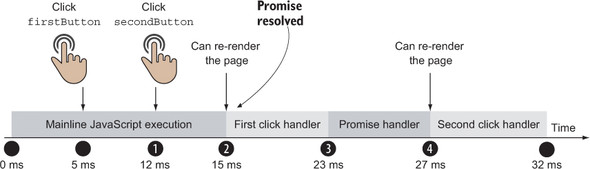
The timing diagram distinguishes a possible re-render between macrotasks from the interval before a queued promise microtask, when re-rendering cannot yet occur. section 13.1.2
