A man-in-the-middle attack places an adversary between two communicating parties. The attacker intercepts traffic, reads it, and may alter it while each side believes it is communicating directly with the other. Unsecured public Wi-Fi, compromised routers, and manipulated DNS paths create practical opportunities for this attack. section 10.2.1 section 10.4
Impersonating the router
An attacker can make devices on a local network treat the attacker’s computer as the router, forwarding traffic normally to avoid suspicion while reading messages, websites, and downloads. Without TLS, the traffic may be plain text; the attacker can also inject fake pages, pop-ups, or malware. section 10.2.1
Figure 10.9 A MITM attack using Cain & Abel. By impersonating the router, an attacker silently intercepts messages between users and the internet. The traffic is forwarded normally to prevent suspicion, but the attacker can read all data in and out.
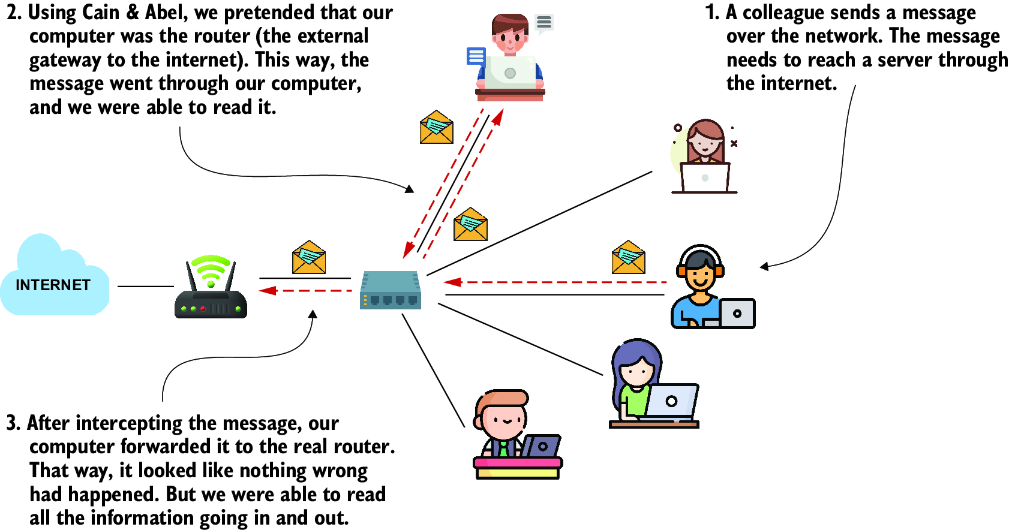
Trace how silently rerouted traffic passes through the attacker before reaching the internet. section 10.2.1
TLS counters the attack by combining:
- Encryption, which makes intercepted messages unreadable. section 10.2.1
- Cryptographic signatures, which expose message tampering. section 10.4
- Digital certificates, which help browsers verify the real website. section 10.4



