liveBook · Manning

Managed principle

As explained in Data-Driven Cybersecurity

The managed principle is the control-rating dimension representing ongoing governance and improvement of cybersecurity practices based on measurements.

The managed principle rates whether an organization actively governs and improves cybersecurity practices by updating policies, procedures, and control implementation based on measurements. section 1.5.1

Within the HITRUST control-rating model, managed follows measurement:

  • Measured assesses the effectiveness of cybersecurity controls through regular metrics. section 1.5.1
  • Managed uses those measurements to support continued improvement and align cybersecurity practices with organizational risk. section 1.5.1
  • The principle contributes to a control statement’s overall maturity and comprehensiveness rating. section 1.5.1
Figure 1.2 HITRUST scoring criterion by percentage. The percentages indicate the weights placed on each category for scoring purposes.
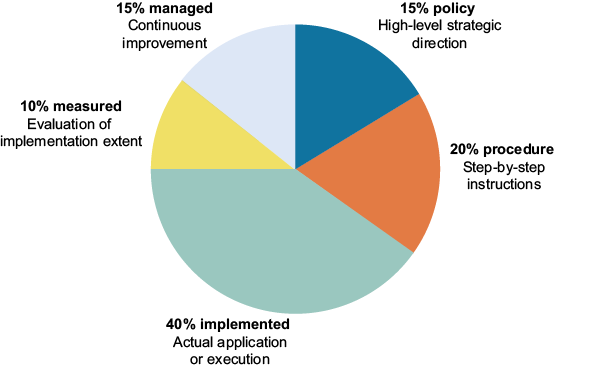
Use the scoring criterion to see how managed relates to policy, procedure, implementation, and measurement in HITRUST assessments. section 1.5.1

How Data-Driven Cybersecurity covers it

How deep it goes
Defines measurement-based improvement and control maturity but does not detail specific update procedures or metrics.
Examples
Uses weighted control ratings, regular effectiveness measurements, and measurement-driven updates to policies, procedures, and controls.
What it assumes
Distinguishes policy, procedure, implementation, and measurement as preceding control-rating principles.
What you can do after
Evaluate cybersecurity practices and update policies, procedures, and control implementation based on measurements.
How it connects
Connects HITRUST framework, cybersecurity metrics, policy, procedure, implementation, measurement, and control maturity.

This explainer was generated by Manning's knowledge graph from the text of Data-Driven Cybersecurity. The section links point to the parts of the book it draws on.