liveBook · Manning

Mastery

As explained in Build High Value Software Systems

The development of skill and capability through progressively challenging work.

Mastery is the opportunity to improve at work that matters. In software development, that means work should become more challenging as a developer grows—not just faster to delegate. In AI-augmented teams, mastery helps developers use AI while still exercising judgment. section 13.3

Repetition without growth

A senior developer who spends twelve months delegating CRUD endpoints to an AI assistant and merging its output without scrutiny is not developing mastery; that work may let their skills atrophy. section 13.3

Figure 13.4 Autonomy, mastery, and purpose as drivers of self-sustaining Lean culture.
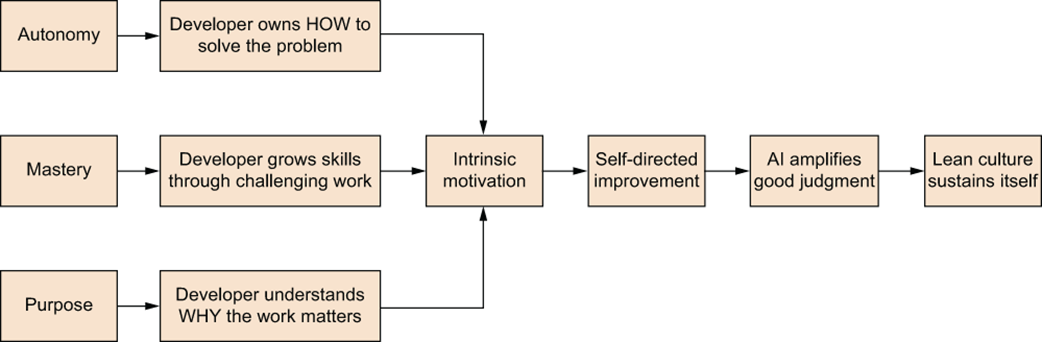
See mastery alongside autonomy and purpose as drivers of a self-sustaining Lean culture. section 13.3

How Build High Value Software Systems covers it

How deep it goes
Defines mastery as improving through increasingly challenging work and contrasts it with repetitive delegation, without prescribing a development method.
Examples
Uses a senior developer delegating CRUD endpoints to AI for twelve months and merging output without scrutiny.
What you can do after
Evaluate whether AI-assisted work builds capability or replaces the judgment needed to keep developing it.
How it connects
Connects mastery to autonomy, purpose, intrinsic motivation, Lean respect for people, and AI-assisted development.

Related concepts

This explainer was generated by Manning's knowledge graph from the text of Build High Value Software Systems. The section links point to the parts of the book it draws on.