MD5 is a deterministic cryptographic hash algorithm that produces a 128-bit digest. It can reveal accidental file corruption, but its security vulnerabilities make it unsuitable for modern security applications. section 4.2.2 section 4.8
Treat MD5 as a compatibility concern rather than a new design choice:
- Retain it only when interacting with historical data or legacy services that require it. section 4.3
- Choose SHA-2 or SHA-3 for new integrity checks and plan algorithm upgrades as security requirements change. section 4.3 section 4.8
- Do not treat an MD5 comparison as protection against active tampering; use a keyed MAC such as HMAC when authenticity matters. section 4.8
Legacy artifact checks
Maven Central may provide .md5 files beside downloaded artifacts. These files remain available for backward compatibility, even though MD5 is insecure and should not guide new security designs. section 4.2.2
Figure 4.5 Files in Maven Central. Notice the .sha1 and .md5 files that contain hash values of the corresponding artifacts. MD5 and SHA-1 are insecure, but Maven Central still uses them for backward compatibility.
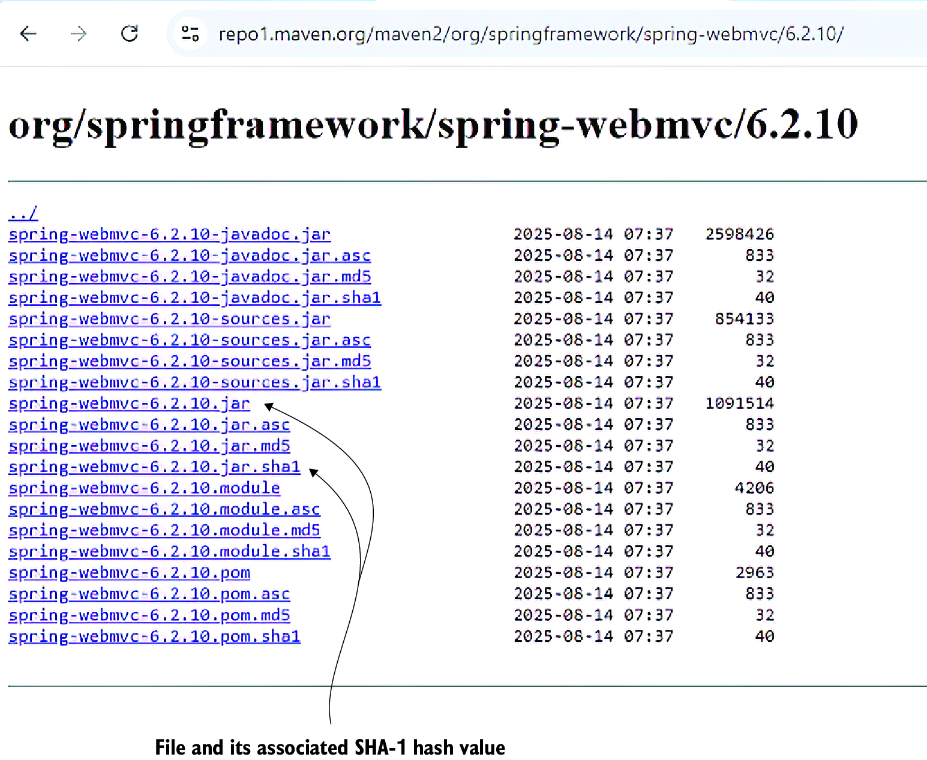
Inspect the artifact listing showing corresponding .md5 and .sha1 files and their compatibility rationale. section 4.2.2


