Measurement turns abstract phenomena, events, objects, or processes into observable values or categories that support analysis and decisions. Good measurement connects a clearly defined concept to data that represent it consistently and accurately. section 6.0 section 6.1
Designing a useful measure typically requires you to:
- Define the phenomenon and enumerate its components before attempting to quantify it. section 6.1
- Choose an appropriate measurement scale, use available data where suitable, and identify proxy measures when direct capture is impossible. section 6.1
- Review and test whether the measure remains consistent, accurate, and stable over time. section 6.0 section 6.1
- Treat every metric as a reasoned choice with strengths, limitations, and possible risks of misleading conclusions. section 6.0
Measuring software usability
A self-report measure can ask how often respondents use a new feature before asking whether it improved usability. Separating usage from evaluation and choosing question order carefully reduces the risk that one question primes the next response. section 6.2.2
Figure 6.7 How do you think the wording of these questions might affect the responses you receive?
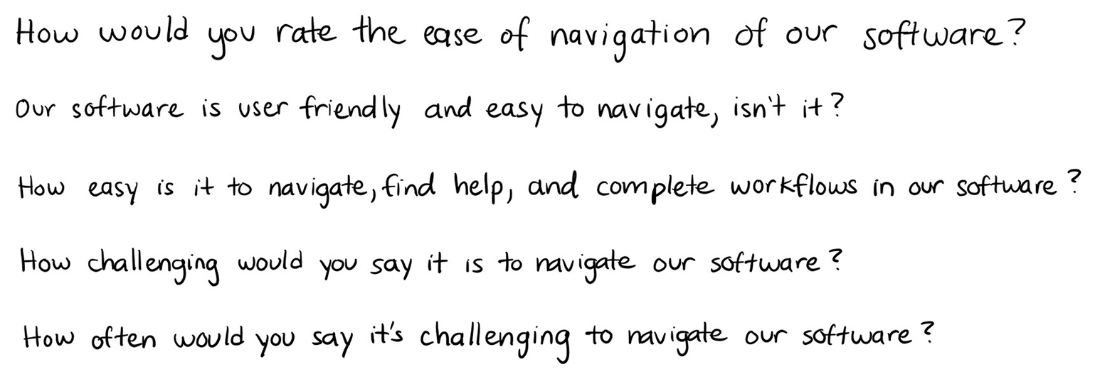
Use the figure to examine how question wording can affect the responses a measure receives. section 6.2.2



