A single conversation thread can accumulate context rot until project decisions, assumptions, and task state become unreliable. A meta-prompting framework replaces that fragile build system with externalized files, fresh agent sessions, and an orchestrated workflow. section 3.5.3
A disciplined framework typically follows four stages:
- Discuss: surface assumptions, ask clarifying questions, and persist product decisions in CONTEXT.md before writing code. section 3.5.3
- Plan: research the codebase and turn the agreed context into an explicit implementation plan. section 3.5.3
- Execute: spawn a fresh agent session for the planned task rather than carrying an indefinitely growing conversation. section 3.5.3
- Verify: validate the result against the persisted project state and task expectations. section 3.5.3
GSD and Superpowers
GSD illustrates a thin orchestrator: it hides XML prompt formatting, subagent orchestration, and state management behind a small command surface. Superpowers illustrates a predefined workflow for guiding users through structured agent work. section 3.5.3
Figure 3.10 Superpowers flow getting user through predefined workflow.
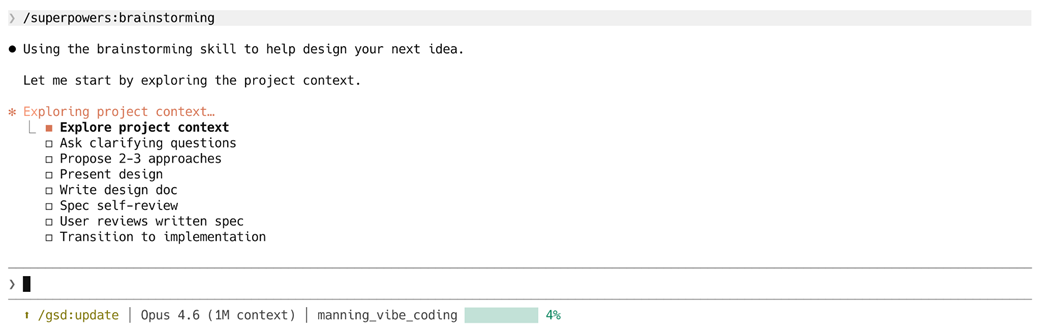
Use the workflow figure to inspect how Superpowers guides a user through predefined stages. section 3.5.3
